Revision Module: 05 of 14
Full Free Driving Theory Practice Test 5
A complete practice run covering official UK road signs and general highway regulations.
Syllabus Covered
The Highway Code & Traffic Signs
Question Pool
25 Multiple-Choice Questions
Target Pass Mark
Aim for 86% or higher
📝 Test Instructions: Simulating standard test papers is the best way to build confidence and prepare for the real thing.
Start Theory Test 5
Real Exam Mode: Q&A with Explanations
What does this sign indicate?
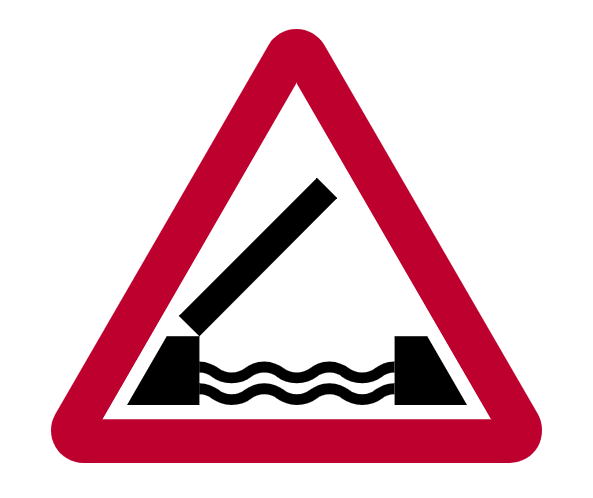
Swing bridge.
Railway crossing.
Hump bridge.
This sign indicates a swing bridge, which can rotate or pivot to allow ships to pass through. Drivers must be aware that the bridge may open, potentially causing delays or requiring them to stop for a while.
What does this sign mean?
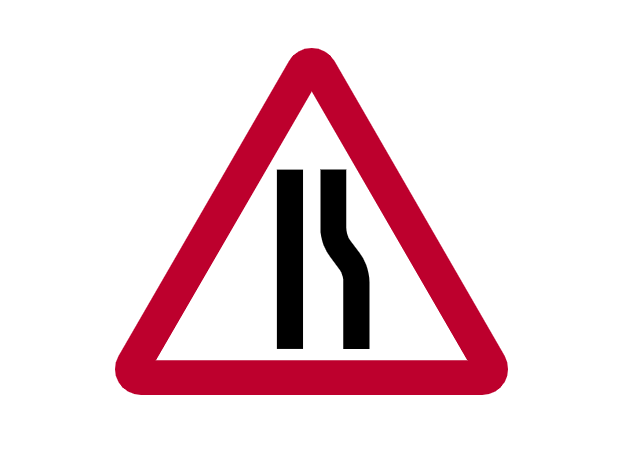
Road narrows on left.
Road narrows on right.
Dual carriageway.
This sign warns that the road narrows on the right, indicating that drivers should be prepared to adjust their position or speed as they approach the narrowing. It helps prevent accidents by alerting drivers to reduced lane space ahead.
How should you park on a hill facing downhill?
Leave gear in neutral.
Wheels away from kerb.
Handbrake only.
Wheels towards kerb.
Turning wheels towards the kerb helps prevent the car from rolling into traffic if brakes fail. It adds extra safety on slopes. Highway Code Rule 252: Park with wheels turned on hills.
What does this sign signify?
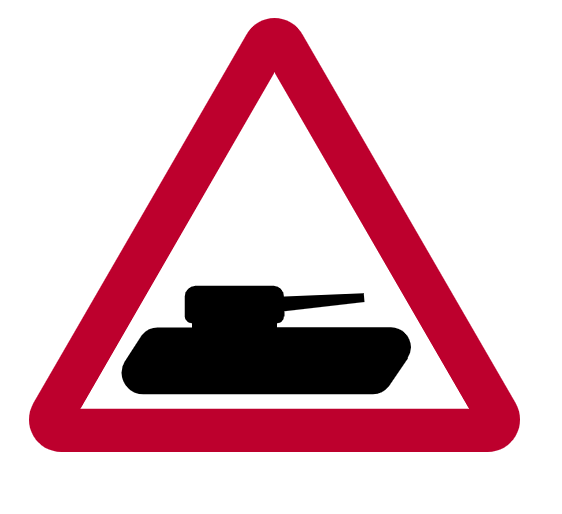
Non-military vehicles.
Fast-moving military vehicles.
Slow-moving military vehicles.
This sign indicates the presence of slow-moving military vehicles on the road, advising drivers to be cautious and allow extra space. Such vehicles may have limited maneuverability and can cause delays or require special attention while driving.
Which sign means ‘No Left Turn’?
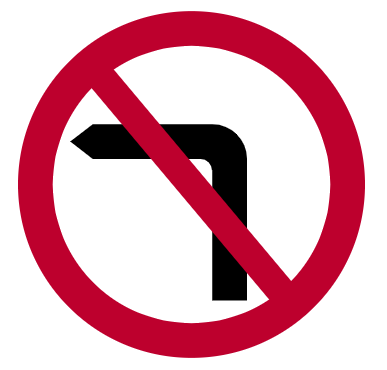
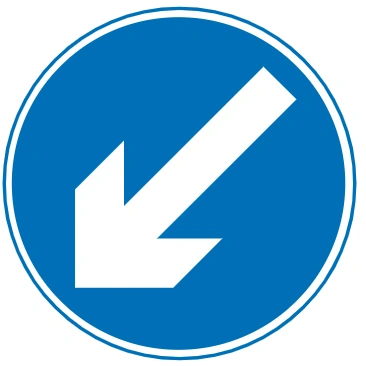
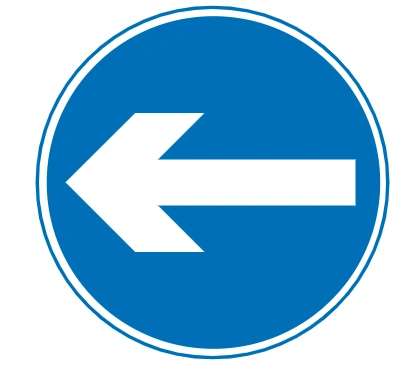
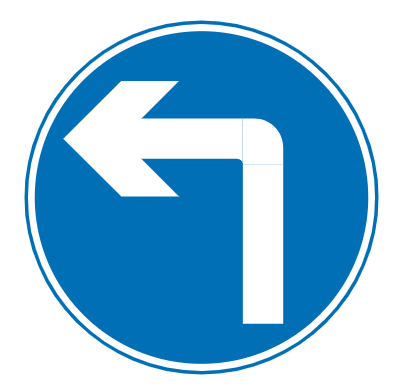
This circular sign with a left arrow crossed by a red line means you’re not allowed to turn left.
When can you enter a yellow box junction?
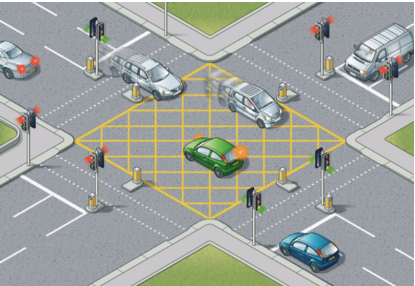
Only if your exit is clear.
Even if exit is blocked.
If traffic is slow.
You must not enter a yellow box junction unless your exit road is clear to avoid blocking traffic. Highway Code Rule 174: Enter the box only when you can pass through without stopping.
What does this sign represent?
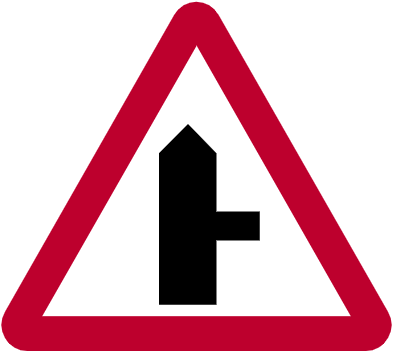
Side road.
Junction on a bend.
T-junction.
This sign indicates the presence of a side road joining the main road. Drivers should be cautious as vehicles may be entering or leaving the road, and they may need to yield or adjust their speed accordingly.
What must you do at a red traffic light?
Slow down.
Stop.
Proceed.
Yield.
You must stop at a red light and wait until it turns green before proceeding to ensure safety. This prevents collisions and maintains order on the road. Highway Code Rule 123: Stop at red signals.
What does this sign represent?
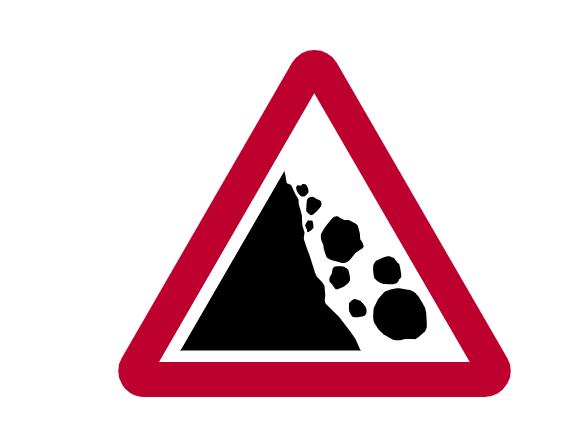
Risk of flooded road.
Risk of falling rocks.
Risk of landslides.
This sign warns of a risk of falling rocks ahead, typically on mountainous or hilly roads. Drivers should be alert, reduce speed, and be prepared to stop or navigate carefully through areas where rockfalls may occur.
In England and Wales, you MUST NOT drive with a blood-alcohol level higher than what?
50 mg per 100 ml of blood.
100 mg per 100 ml of blood.
Zero tolerance (no alcohol at all).
80 mg per 100 ml of blood.
In England and Wales you MUST NOT drive with a breath alcohol level higher than 35 microgrammes/100 millilitres of breath or a blood alcohol level of more than 80 milligrammes/100 millilitres of blood. Highway Code Rule 95.
When is it acceptable NOT to wear a seat belt?
During short trips.
When reversing.
On motorways.
In taxis.
You may remove your seat belt while reversing for better movement and control of the vehicle. Highway Code Rule 99: Seat belts must be worn except when reversing.
At 60 mph, what is the typical stopping distance?
36 metres.
53 metres.
96 metres.
73 metres.
At 60 mph, the average stopping distance is around 73 metres, including thinking and braking time. Speeding increases stopping distance drastically. Highway Code Rule 126: Maintain safe stopping distances.
What does this sign signify?
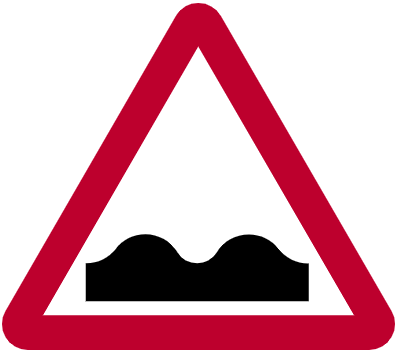
Slippery road.
Uneven road.
Rough surface.
This sign warns of an uneven road surface ahead, which may cause discomfort or instability for vehicles. Drivers should slow down and be prepared for bumps or irregularities in the road that could affect vehicle control.
What does this sign represent?
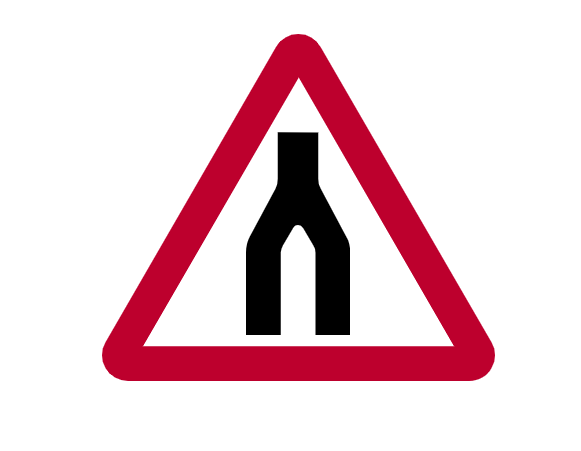
End of dual carriageway.
Start of dual carriageway.
Crossroads.
This sign indicates the end of a dual carriageway, meaning the road will no longer have separate lanes for traffic in each direction. Drivers should be prepared for changes in road layout and adjust their driving accordingly.
When should hazard warning lights be used?
To warn tailgaters.
When parked illegally.
To overtake.
To warn of a hazard ahead.
Use hazard lights to alert others to temporary hazards like breakdowns or obstructions. Highway Code Rule 116: Use only when your vehicle presents a hazard.
What do the red reflective road studs indicate?
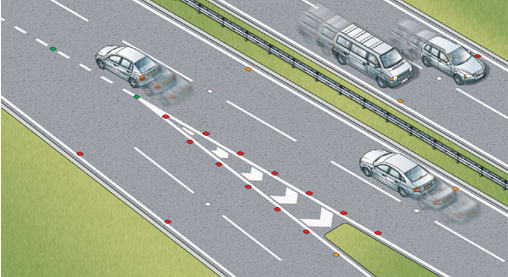
Right edge of the road.
Left edge of the road.
Middle of the road.
Red reflective studs mark the left edge of the carriageway, guiding drivers safely on the road edges, especially in poor visibility. Highway Code Rule 132: Reflective road studs mark lanes and carriageway edges for safe driving.
What does this sign mean?
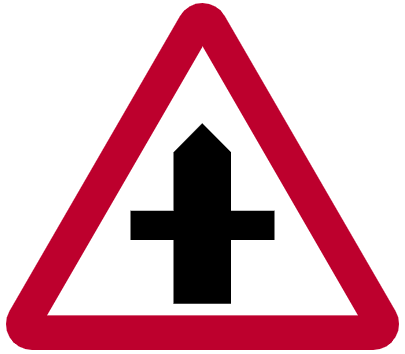
Pelican crossing.
T-junction.
Crossroads.
This sign indicates an upcoming crossroads, where two or more roads meet. Drivers should be prepared to stop and give way, depending on the traffic control measures at the junction, and be alert for other vehicles and pedestrians.
What does this sign indicate?
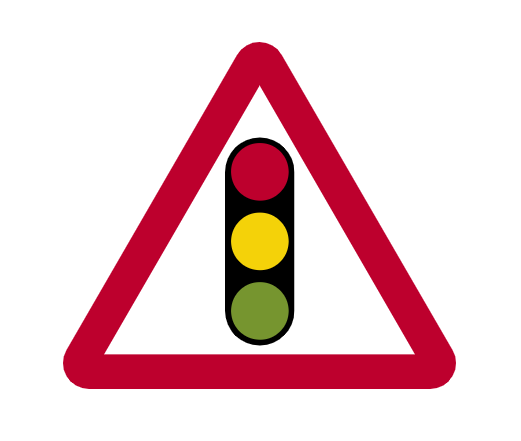
Traffic signals.
Part time signals.
Yield signals.
This sign indicates the presence of traffic signals ahead, warning drivers to be prepared for changes in traffic flow. It helps them anticipate stopping or slowing down in response to the signal lights, ensuring safe driving conditions.
How can you avoid dazzling drivers at night?
Drive with fog lights.
Use full beam.
Use dipped beam.
Flash lights often.
Always use dipped headlights when facing or following other traffic at night to avoid dazzling others. Highway Code Rule 114: Use dipped lights to avoid dazzling.
Which sign represents a Mini-Roundabout?
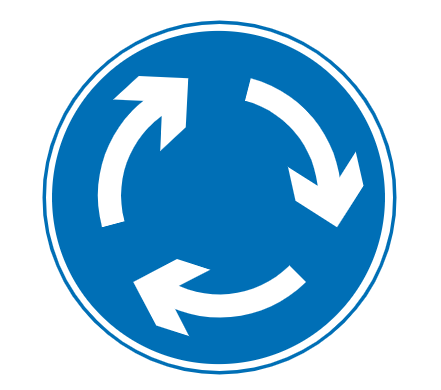
This blue circular sign with three white arrows in a circle indicates a mini-roundabout. You must give way to traffic from the right and follow the direction shown.
What does this sign indicate?

Obstruction on near-side edge.
Obstruction on off-side edge.
Red marker on near-side edge.
This circular sign indicates the presence of a red marker on the near-side edge of the road, alerting drivers to be cautious of an obstruction or hazard on that side. It helps drivers adjust their position and speed to avoid potential danger.
What is the correct hand signal for a right turn?
Left arm straight out.
Right arm straight out.
Right arm bent downward.
Right arm bent upward.
The correct hand signal for a right turn is extending the right arm straight out with the palm facing forward. In the UK, drivers sit on the right side of the vehicle, so the right arm is used to clearly signal intentions to other road users. (Official UK Highway Code: Signals to other road users).
Which road sign tells you that wide vehicles are not allowed?
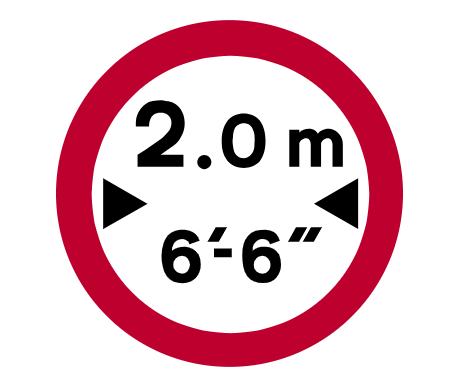
A red circular sign with a width measurement (e.g: 2.0 m or 6'- 6') indicates a legal limit—wider vehicles must not enter.
What’s the national speed limit on single carriageways?
50 mph.
55 mph.
70 mph.
60 mph.
The national speed limit on single carriageways for cars is 60 mph unless signs indicate otherwise. Highway Code Rule 125: Speed limits depend on road type and vehicle.
How much distance must you keep behind another vehicle?
5 second.
4 seconds.
3 seconds.
2 seconds.
Maintain at least a 2-second gap under normal conditions to ensure safe stopping distance and reaction time. Increase gap in poor weather. Highway Code Rule 126: Safe following distance.
I think there is a mistake in test 5 for the question asking about the arm signal for turning right. The answer is for the American roads not UK.
Thank you for reporting this! You are entirely correct-that question had a technical error. We’ve fixed it. Thanks for helping us keep the test bank accurate! We are also re-verifying all questions, answers, and explanations across the site.