Revision Module: 04 of 14
Full Free Driving Theory Practice Test 4
Evaluate your understanding of UK driving laws, road safety protocols, and traffic signs.
Syllabus Covered
The Highway Code & Traffic Signs
Question Pool
25 Multiple-Choice Questions
Target Pass Mark
Aim for 86% or higher
📝 Test Instructions: Try to finish the whole set in one go without looking at any notes for an honest assessment of your knowledge.
Start Theory Test 4
Real Exam Mode: Q&A with Explanations
What does this sign indicate?
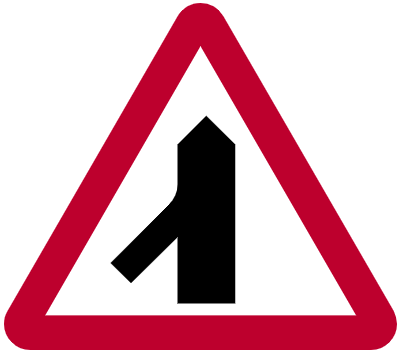
Traffic merges from the left.
Vehicles must turn left.
No merging allowed.
This warning sign alerts drivers that traffic will merge from the left, requiring them to be aware of vehicles entering from that direction. Drivers should adjust their speed and position to allow safe merging and avoid congestion.
A pedestrian starts crossing as you turn at a junction. What should you do?
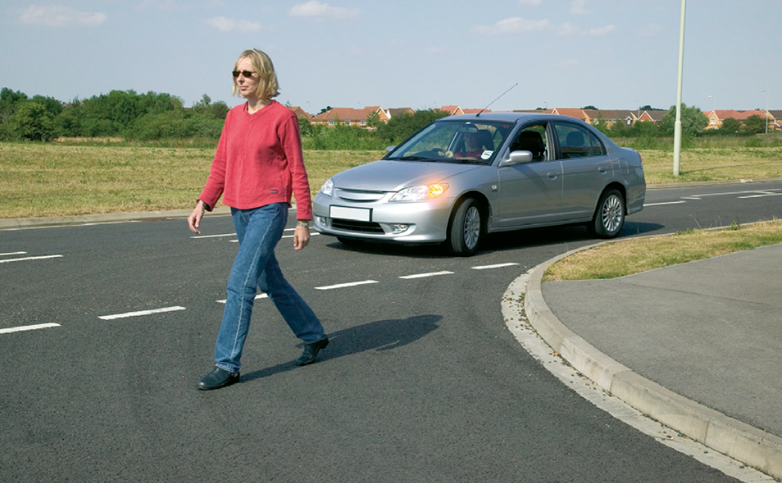
Continue carefully in front of them.
Sound your horn to warn them.
Stop and let them cross safely.
When a pedestrian begins to cross, you must give way to them, even if you're preparing to turn. This rule ensures pedestrian safety. Highway Code Rule 170: Give way to pedestrians who have started to cross.
In road markings, what does a solid white line nearest to you indicate?
Cross only in emergencies.
Cross to enter premises.
May cross to overtake.
MUST NOT cross or straddle it.
A solid white line indicates that you should not cross the line or drive with the line directly under the vehicle. This marking is used to prevent drivers from moving into adjacent lanes where it could be dangerous.Why not the others? May cross to overtake — This is incorrect because solid white lines are specifically designed to prevent lane changes for safety, and overtaking requires crossing into another lane.</p Cross only in emergencies — While you might cross a solid white line in a dire emergency, this is not the standard rule. The primary instruction is to not cross it.</p Cross to enter premises — Generally, you should not cross a solid white line to enter premises. If necessary, you should find a break in the line or another legal entry point.
Which one of these signs represents No Motor Vehicles?
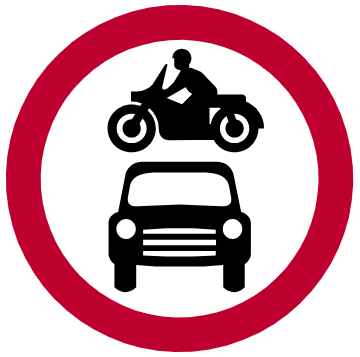
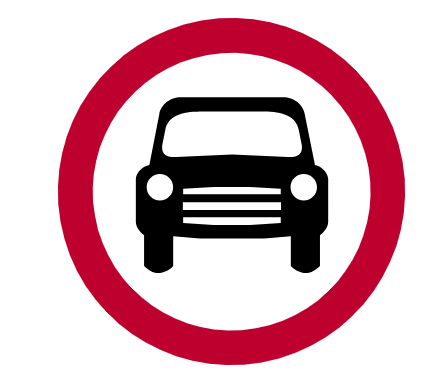
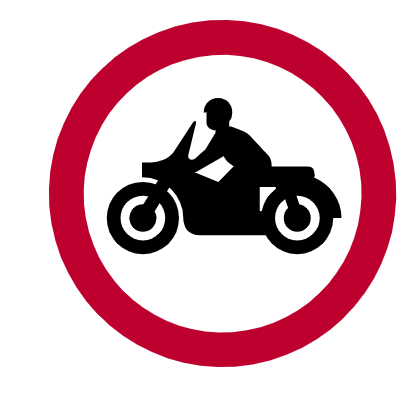
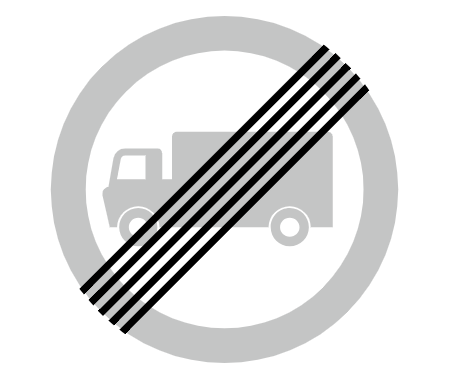
This circular sign shows a car above a motorcycle, meaning that both cars and motorcycles are prohibited from entering the road.
Which sign means No Overtaking?
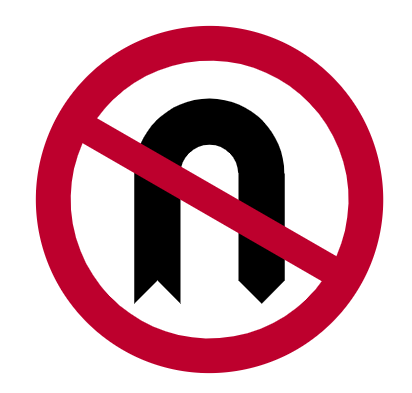
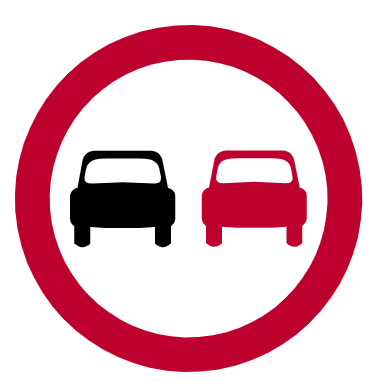
The circular sign with a red car beside a black car means overtaking is prohibited—usually in areas with poor visibility or danger.
What does this sign mean?
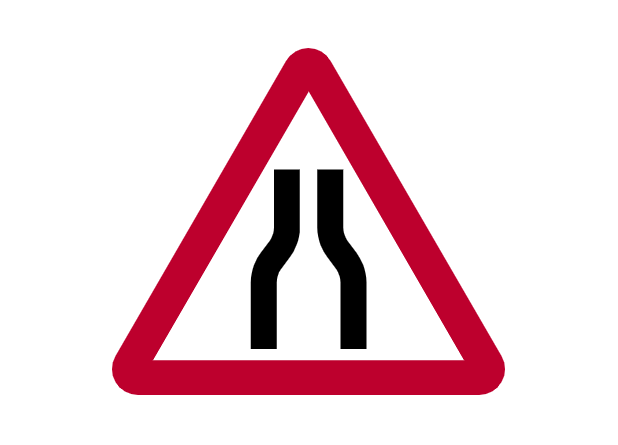
Dual carriageway ahead.
Road narrows on both sides ahead.
Road widens ahead.
This warning sign indicates that the road narrows on both sides, meaning drivers should reduce speed and be prepared for less road space. It warns of potential hazards from reduced lane width or obstacles ahead.
You're driving on a motorway and notice two cameras mounted above your lane. What are they most likely used for?
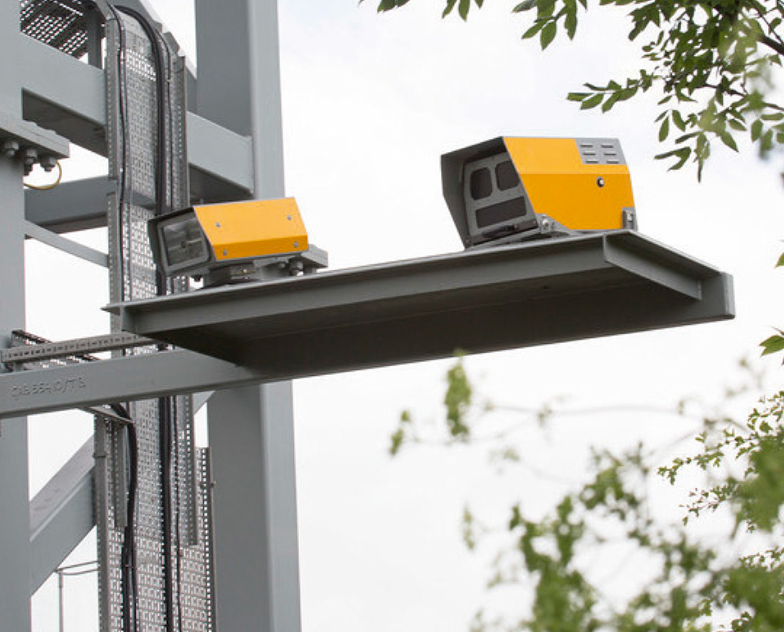
To monitor lane discipline.
To detect vehicle height.
To enforce speed limits.
Overhead cameras are mainly used to monitor and enforce speed compliance, often by calculating average speed over a stretch of road. Highway Code Rule 124: The speed limit is the absolute maximum and should not be exceeded... Enforcement may include cameras.
Driving a long vehicle towards a dual carriageway with a shallow central reservation. What should you do?
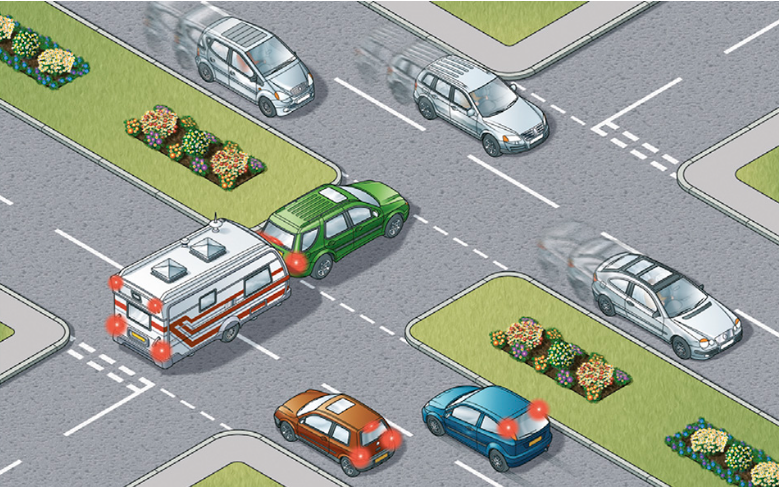
Turn quickly into the gap.
Stop in the reservation.
Wait until you can cross safely.
If the central reservation is too shallow for your vehicle, wait until it’s safe to cross both lanes at once to avoid blocking traffic. Highway Code Rule 173: Assess your vehicle’s length and avoid obstructing traffic.
What does this sign signify?
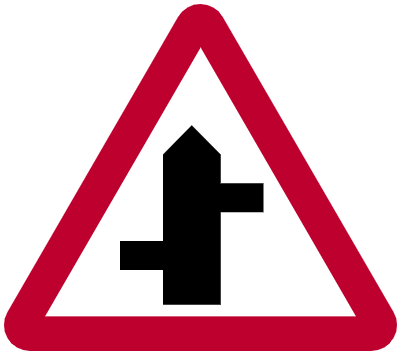
Staggered junction ahead.
Box junction ahead.
Pedestrian junction ahead.
This sign indicates a staggered junction, where two side roads join the main road at different points. Drivers should be cautious and aware of traffic from both directions as they approach this type of junction.
When parking downhill, which action must you take?
Keep wheels straight.
Turn wheels away from curb.
Turn wheels toward curb.
Use parking brake only.
When parking downhill with a curb, turning the wheels toward the curb ensures that if the vehicle begins to roll, the curb will stop the tire, preventing it from rolling into traffic. 🚗🛑 Why not the others? Turn wheels away from curb — This is incorrect because if the brakes fail, the car will roll into traffic.</p Keep wheels straight — This is incorrect because the car could roll straight into traffic if the brakes fail. Use parking brake only — This is incorrect because relying solely on the parking brake might not be sufficient, as the brake could fail.
What should drivers do at the start of contraflow systems?
Maintain speed and distance.
Maintain speed and decrease distance.
Speed up and shorten distance.
Slow down and increase distance.
When entering a contraflow system, drivers should reduce their speed to allow more time to react to unexpected situations and increase the distance between their vehicle and the one ahead to have sufficient stopping distance.Why not the others? Maintain speed and distance — Maintaining speed in a potentially congested and altered traffic pattern is unsafe.</p Speed up and shorten distance — Speeding up and reducing following distance in a contraflow situation is dangerous and increases the risk of accidents. 💥 Maintain speed and decrease distance — Decreasing distance reduces reaction time and increases the risk of collision. 🚗 + 🚗 = 💥
When should you check blind spots before moving off?
After checking mirrors.
Before checking mirrors.
Only when visibility is poor.
Only when turning.
Checking your mirrors first gives you an initial awareness of your surroundings. Then, checking blind spots confirms that the adjacent lane is clear before you move. This two-step process ensures a safe departure. 🚗 Why not the others? Before checking mirrors — Mirrors provide the initial awareness, and blind spots offer a final check. Only when visibility is poor — Blind spots should be checked regardless of visibility conditions. ☀️ 🌧️ Only when turning — Blind spots should be checked before any lateral movement, not just turns.
What does this sign mean?
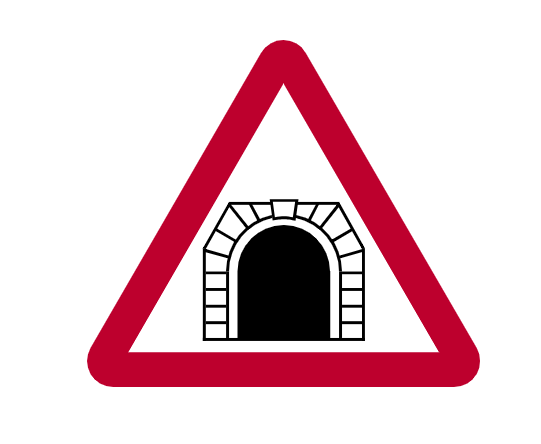
Hump bridge ahead.
Railway bridge ahead.
Tunnel ahead.
This sign indicates that a tunnel is ahead, advising drivers to prepare for reduced visibility and potentially restricted headroom. Drivers should be alert to traffic conditions and adjust their speed accordingly when entering the tunnel.
What does this sign indicate?
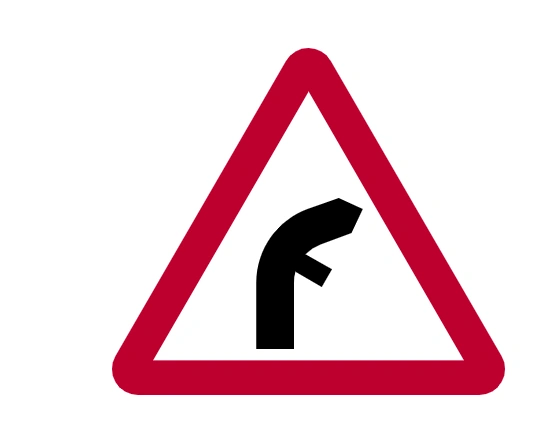
T-junction.
Junction on a hill.
Junction on a bend.
This warning sign indicates a side road joins on a bend, which may limit visibility and require extra caution. Unlike a regular T-junction, this junction appears unexpectedly while navigating a curve, increasing the risk if drivers are not alert.
At what distance MUST you be able to read a vehicle number plate from?
15 metres.
25 metres.
20 metres.
30 metres.
You must be able to read a vehicle number plate from 20 metres away. This is a standard requirement to ensure visibility and legibility for identification purposes. 🚗Why not the others? 15 metres — This distance is too short and doesn't provide enough visibility for accurately reading the plate under various conditions. 25 metres — This distance is unnecessarily long and not the standard requirement. 30 metres — This distance exceeds the required visibility range for reading a number plate.
In slow-moving traffic, what should you try to avoid?
Frequent lane changes.
Keeping a safe distance.
Watching for pedestrians.
Using mirrors.
In slow-moving traffic, you should avoid frequent lane changes because they increase the risk of collisions and make traffic flow less predictable. Staying in your lane, keeping a safe distance, and being alert helps maintain safety and smooth traffic movement.
What does this sign mean?
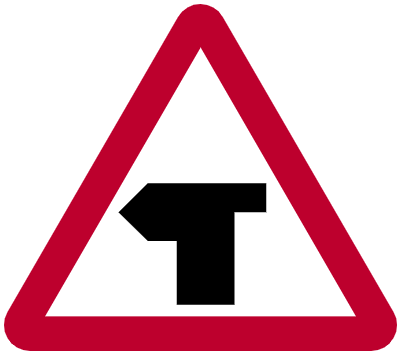
Turn right.
Crossroads.
T-junction.
This sign warns drivers of an upcoming T-junction, where a side road joins from the right or left. Drivers must slow down and be prepared to yield to traffic when approaching this type of junction.
What is tailgating?
Driving too fast.
Driving without lights.
Following too closely.
Overtaking another vehicle.
Tailgating means following another vehicle too closely. This is dangerous because it reduces the time you have to react if the vehicle in front of you stops suddenly. 🚗 💨 Why not the others? Driving at high speed — Speeding is not tailgating; it's about exceeding the speed limit.</p Overtaking dangerously — This involves passing another vehicle in an unsafe manner, not following too closely.</p Driving without lights — This refers to operating a vehicle without headlights or taillights, which is different from tailgating. 💡
What lights MUST be lit between sunset and sunrise?
Headlights and fog lights.
Only headlights.
Only sidelights.
Sidelights and rear registration plate lights.
Sidelights and rear registration plate lights must be lit between sunset and sunrise to ensure the vehicle is visible to others and the registration plate is illuminated for identification. This is a legal requirement for safety. 🌙 Why not the others? Headlights and fog lights — Fog lights are only to be used when visibility is seriously reduced. ⚠️ Only headlights — Sidelights and rear registration plate lights are also required. Only sidelights — Rear registration plate lights are also a must.
What does this sign mean?
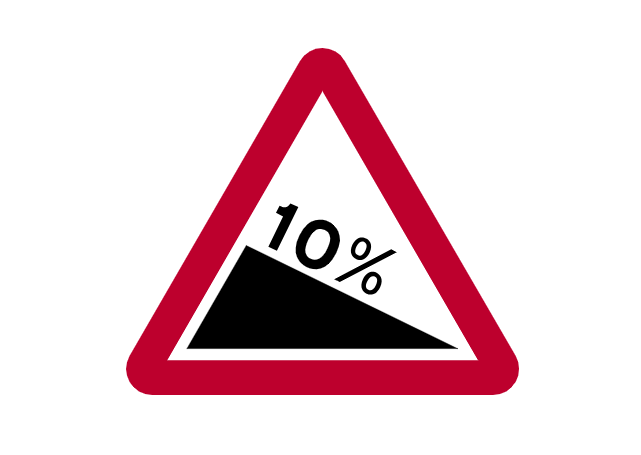
Slippery road, 10% gradient.
Steep hill upwards, 10% gradient.
Steep hill downwards, 10% gradient.
This warning sign indicates that there is a steep downward hill with a gradient of 10%, alerting drivers to reduce speed and drive cautiously. It helps prevent accidents by preparing drivers for the challenging road conditions ahead.
What should you cover a burn with, if available?
Adhesive bandage.
Cotton wool.
Cling film.
Sterile gauze.
Cling film is ideal for covering burns because it's non-adhesive, sterile, and can help retain moisture, which promotes healing and reduces the risk of infection. It also allows the wound to breathe.Why not the others? Cotton wool — Cotton wool is not suitable as its fibers can stick to the burn, causing further damage.🔥 Adhesive bandage — Adhesive bandages can stick to the burn and cause damage when removed. It is also not ideal for larger burn areas. Sterile gauze — While sterile gauze can be used, it may stick to the burn. Cling film is preferred for its non-adhesive properties.
What do rectangular traffic signs indicate?
Warnings.
Orders.
Information.
Rectangular traffic signs provide information, such as directions, distance, or route numbers, helping drivers navigate. These signs are different from circular (orders) and triangular (warnings) signs, which communicate mandatory actions and hazards, respectively.
When joining a motorway, which action BEST ensures safety?
Cross solid white lines immediately.
Maintain constant slow speed.
Match speed to traffic flow.
Stop on the slip road.
Matching your speed to the traffic flow on the motorway is crucial for seamlessly integrating without disrupting other vehicles. This minimizes the risk of collisions and promotes a smooth transition onto the motorway. 🚗💨Why not the others? Stop on the slip road — Stopping on the slip road can cause rear-end collisions and obstruct other vehicles attempting to join the motorway.</p Cross solid white lines immediately — Solid white lines indicate lane boundaries and should not be crossed immediately as it's unsafe.</p Maintain constant slow speed — Maintaining a constant slow speed can disrupt the flow of traffic and increase the risk of being rear-ended. 🐢
What do circular traffic signs indicate?

Directions.
Orders.
Warnings.
Circular traffic signs typically give orders that must be followed, such as speed limits or no entry restrictions. These signs convey mandatory actions for drivers, unlike triangular warning signs or rectangular information signs.
What does this blue circular sign signify?

Warning of hazard.
Mandatory instruction.
Prohibited action.
Blue circular signs give mandatory instructions, such as directions to follow or actions to take, like turning in a specific direction or keeping to a particular lane. Unlike warning or prohibition signs, these must be followed by drivers.