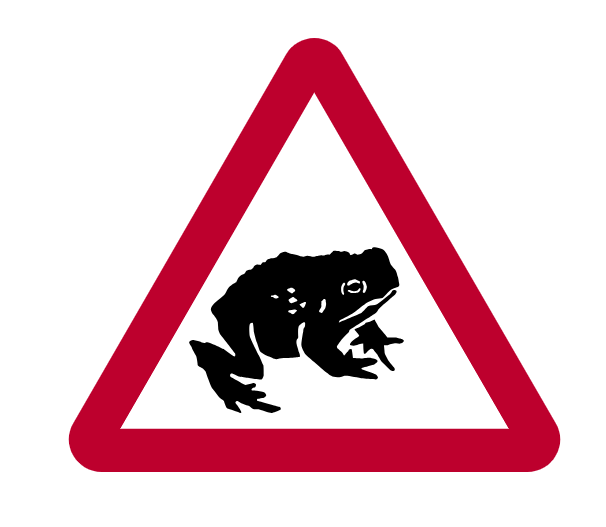
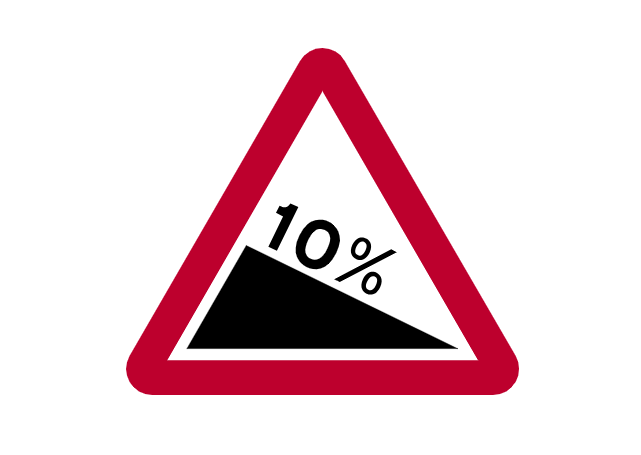
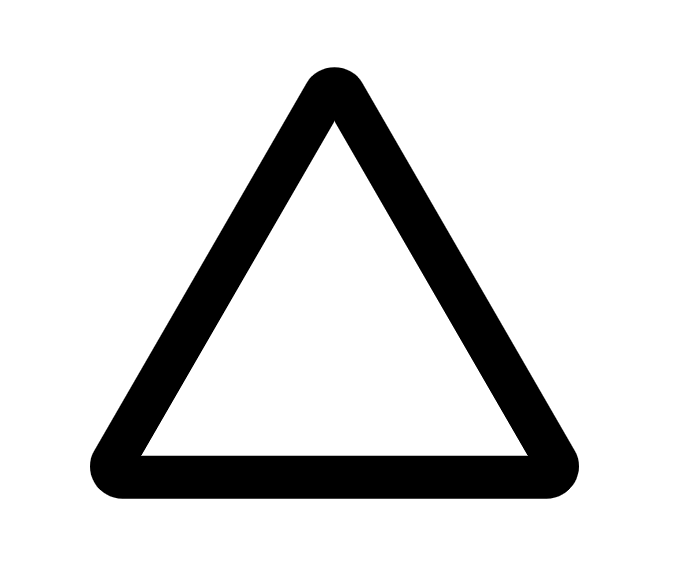
What should you do when you see this sign?
Slow down and be prepared to stop.
Sound your horn to clear the road.
The toad crossing sign warns you to reduce speed and be alert for toads crossing, especially during migration periods.
What does the 'B' in 'DRABC' stand for?
The 'B' in 'DRABC' stands for Breathing. DRABC is a mnemonic used in first aid. It helps you remember the order in which to assess a casualty: Danger, Response, Airway, Breathing, Circulation.
Why not the others?
Bleeding — While controlling bleeding is crucial in first aid, it's covered under the 'C' for Circulation in DRABC.
Blood pressure — Blood pressure is an important vital sign, but it is not part of the initial DRABC assessment.
Bystanders — Bystanders can be helpful in an emergency, but 'B' in DRABC focuses on the casualty's immediate breathing status.
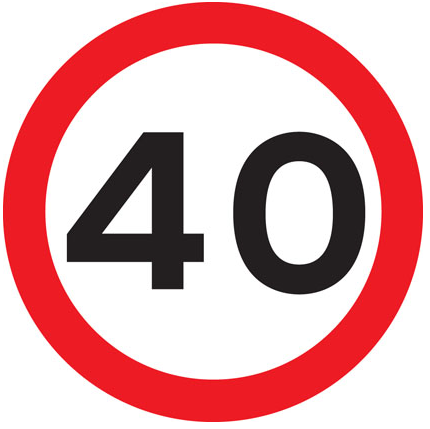
What does this sign indicate?
End of maximum speed limit.
End of minimum speed limit.
This sign indicates the maximum legal speed (in miles per hour) permitted on that road. Drivers must not exceed this limit, but should drive more slowly if road, weather, or traffic conditions make it unsafe to travel at the maximum speed.
What should you do at open crossings with a Give Way sign?
Call the signal operator before crossing.
Look, listen and ensure no train.
Proceed with caution and cross.
Sound your horn and cross quickly.
At open crossings with a Give Way sign, you should look, listen, and ensure no train is approaching before proceeding. This ensures safety and prevents collisions with trains. It's similar to approaching any intersection with a give way sign, you must check to ensure it is safe before proceeding.
Why not the others?
Proceed with caution and cross — This is incorrect because proceeding with caution is not enough; you must positively ensure no train is coming.
Sound your horn and cross quickly — This is incorrect because sounding your horn doesn't guarantee a train won't approach, and crossing quickly could be dangerous if a train is near. 📢 💨
Call the signal operator before crossing — This is incorrect because it's not practical or necessary to call the signal operator at every open crossing. The Give Way sign indicates you must assess the situation yourself. 📞
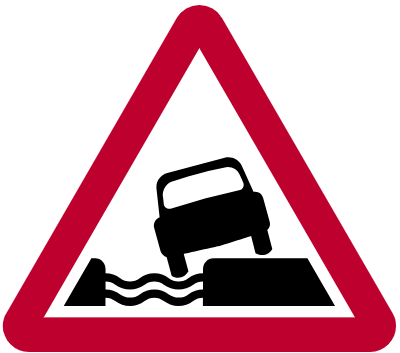
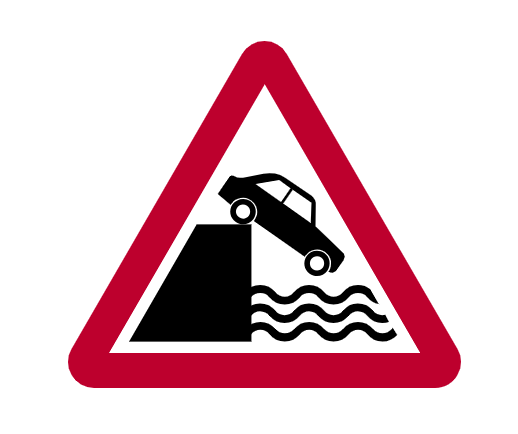
Which sign means WATER COURSE ALONGSIDE ROAD ahead?
This sign warns drivers that there is a water course, such as a river or canal, running alongside the road. Extra care should be taken, especially in poor visibility or at night, because leaving the carriageway could be particularly dangerous.
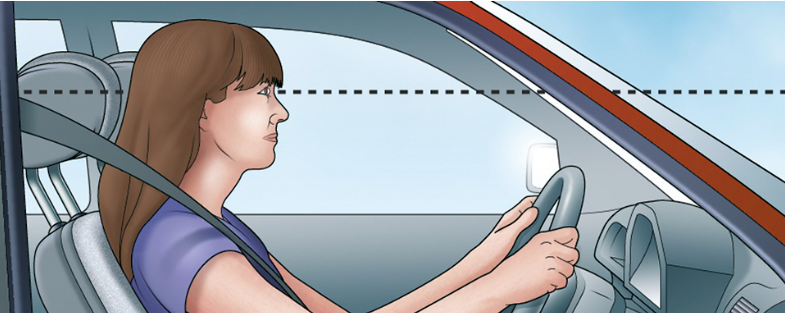
Why should you adjust your head restraint before driving?
To reduce whiplash injury.
To reduce glare from mirrors.
Properly adjusted head restraints help protect the neck and spine by minimizing whiplash risk during rear-end collisions. Highway Code Rule 97: Make sure head restraints are properly adjusted to reduce the risk of neck and spine injuries in the event of a collision.
Which is the safest place to stop on a motorway?
A service area is the safest place to stop on a motorway. Service areas are designed for vehicles to stop safely, refuel, rest, and access facilities away from the traffic flow. ☕🍔
Why not the others?
Hard shoulder — The hard shoulder is for emergencies only, not for routine stops.⚠️
Emergency area — Emergency areas are for emergencies only and should not be used for rest stops. 🚨
Left lane — Stopping in the left lane is incredibly dangerous and illegal due to active traffic flow. 🚗💨
When should you use the middle lane on a three-lane carriageway?
Driving normally in free-flow traffic.
Overtaking or turning right.
Preparing to exit or turn off the carriageway.
Staying in the middle lane to match other vehicles.
Using the middle lane is appropriate when overtaking a slower vehicle or preparing to turn right. These situations require you to move away from the left lane temporarily.
Why not the others?
Driving normally in free-flow traffic — You should normally drive in the left lane unless overtaking.
Staying in the middle lane to match other vehicles — Remaining in the middle lane when not overtaking can cause congestion and is not proper lane discipline.
Preparing to exit or turn off the carriageway — The right lane is typically used when preparing to exit or turn off the carriageway, not the middle lane. 🛣️
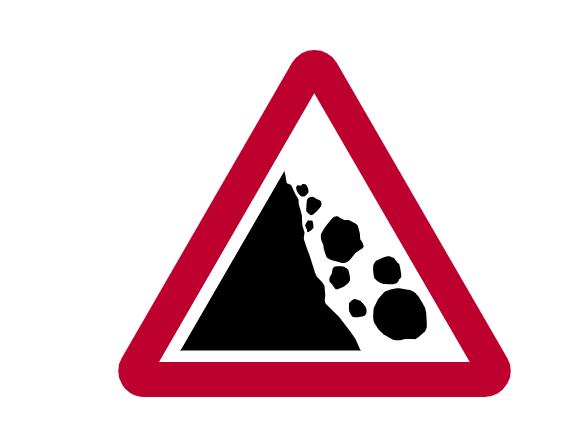
Which road sign means there’s a danger of rocks falling onto the road?
This warning sign is used in areas where landslides or falling rocks are possible, especially near cliffs or mountains.
What does this sign represent?
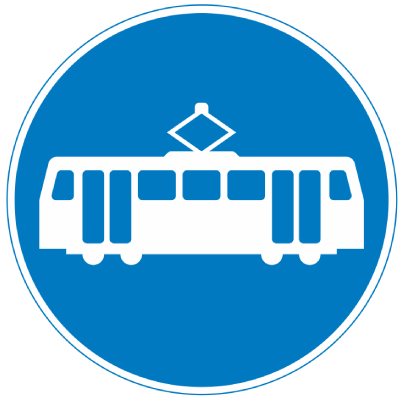
A blue circular sign with a tram symbol gives a mandatory instruction. It means the route is reserved for trams only.
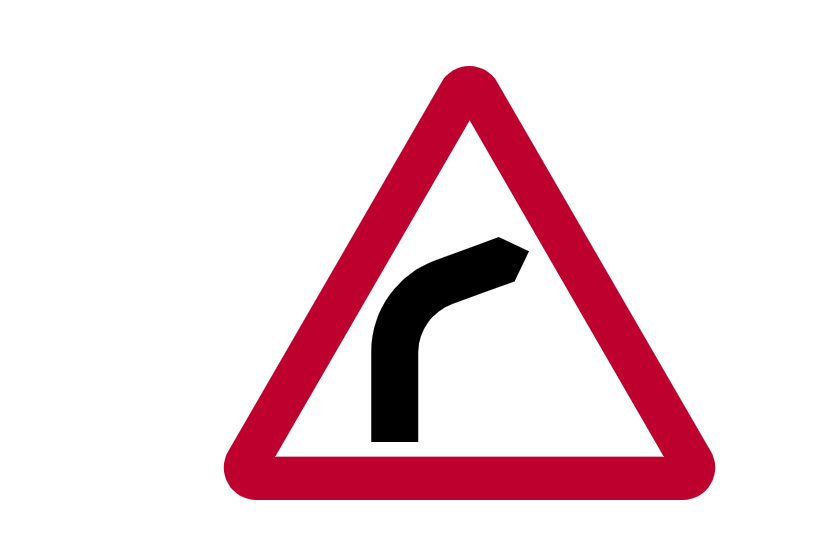
What does this sign represent?
Bend to right turn ahead.
Prohibited right turn ahead.
This warning sign indicates a gentle bend to the right, alerting drivers to slow down and stay in control. It is not a sharp turn or a restriction but simply a caution about a curved road ahead.
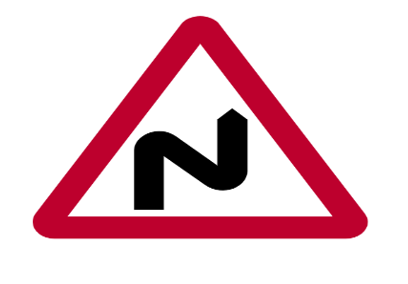
What does this sign indicate?
Double bend first to the right.
Road narrows on both sides.
This warning sign alerts drivers to a series of two bends, with the first bending to the right. It helps motorists reduce speed and prepare for multiple curves, unlike a single bend or one starting in the opposite direction.
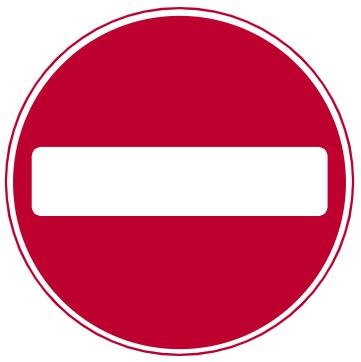
What does this sign mean?
No motor vehicles except buses.
No entry for vehicular traffic.
This sign means that no motor vehicles are allowed to enter the road beyond this point. It is used to restrict entry and keep the road clear for safety or specific use.
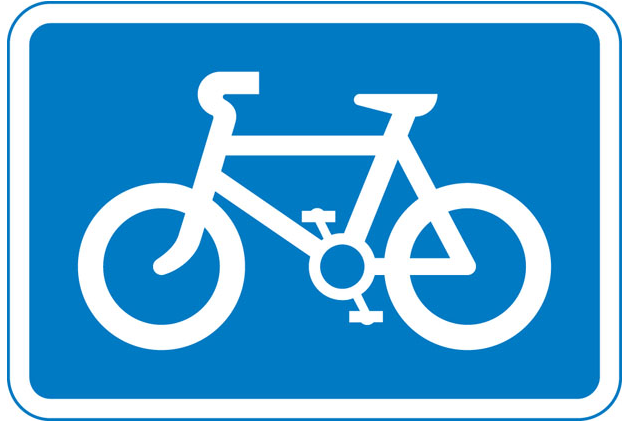
What does this sign indicate?
Route for pedal cycles only.
Route for pedal cycles and pedestrians.
No entry for pedal cycles.
Blue circular signs give mandatory instructions. The cycle symbol shows the route is for pedal cycles only.
What does this sign mean?
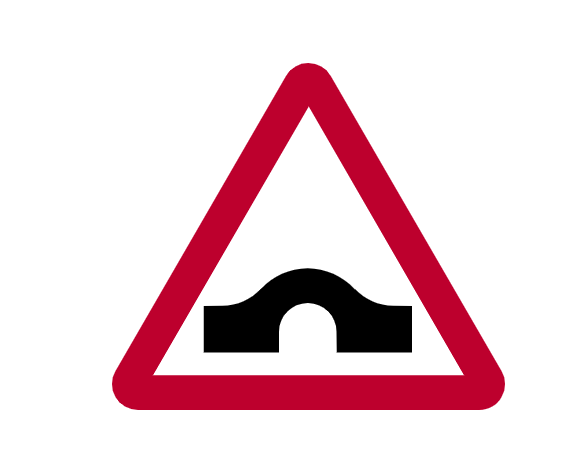
This warning sign alerts drivers to a hump-backed bridge, where the road surface rises steeply and visibility may be limited. It is not a swing bridge or tunnel but a specific structure requiring reduced speed and caution when approaching.
When should arm signals be used?
Only during daylight hours.
When visibility is clear.
When indicators fail or aren’t visible.
Arm signals should be used when your vehicle's direction indicators are not functioning or are difficult to see. This ensures other road users are aware of your intentions to turn or stop.
Why not the others?
Only during daylight hours — Arm signals can and should be used at any time of day when your indicators are not working.
Only on motorways — Arm signals are not specific to motorways and can be used on any road.
When visibility is clear — Arm signals are useful when visibility is clear, but their primary use is when indicators are not working, regardless of visibility.
When should you check your tyre pressures?
Checking your tyre pressures weekly ensures they are at the correct level. Correct tyre pressure improves safety, fuel efficiency, and tyre life. Regular checks can help identify slow punctures or leaks early.
Why not the others?
Monthly — Checking tyre pressure monthly is not frequent enough to maintain optimal performance and safety.
Annually — Checking tyre pressure annually is far too infrequent and can lead to dangerous driving conditions.
Every six months — Checking tyre pressure every six months is also not frequent enough to ensure safety and efficiency.
On icy roads, how much greater can stopping distances be compared to dry roads?
On icy roads, the stopping distance can be ten times greater than on dry roads due to the significantly reduced friction between the tires and the road surface. 🚗❄️ This makes it much harder to slow down or stop.
Why not the others?
Double the distance — This is incorrect because icy roads drastically reduce friction, requiring a much greater increase in stopping distance than just double.
Three times greater — This is incorrect because the reduction in friction on icy roads is far more significant, leading to a stopping distance much longer than three times the normal distance.
Five times greater — This is incorrect because icy conditions severely impair a vehicle's ability to stop, requiring a stopping distance that is much more than five times greater.
What does this sign signify?
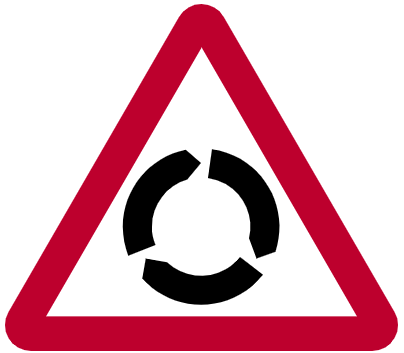
This warning sign indicates that a roundabout is ahead, and drivers must prepare to give way to traffic from the right. It is different from a mini-roundabout, which has a smaller central circle and is usually used in low-speed urban areas.
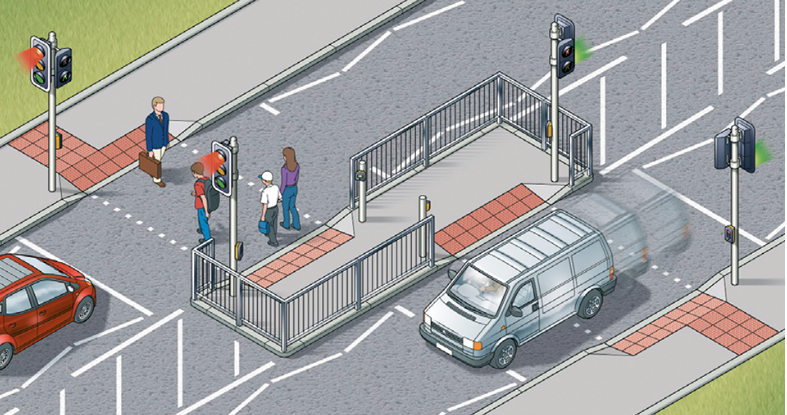
A pedestrian is waiting at a staggered crossing with an island in the middle. What should you do?
Stop only if they’re on your side.
Wait until they cross both roads.
Stop regardless of their position.
At staggered crossings with a central island, each side is treated as a separate crossing. You must only stop if the pedestrian is on your side and the crossing signal shows red. Highway Code Rule 28: Staggered crossings (with an island in the middle) are two separate crossings.
What do 'countdown' markers at a motorway exit represent?
Countdown markers appear on the left-hand side of the road as you approach a motorway exit. Each marker represents 100 yards to the exit, helping drivers gauge the remaining distance. There are usually three markers, then two, and finally one before the exit.
Why not the others?
50 yards to the exit — Countdown markers indicate distances in 100-yard increments, not 50.
200 yards to the exit — Each countdown marker represents 100 yards, not 200 yards.
500 yards to the exit — The markers are spaced at 100-yard intervals, not 500.
Which statement best describes the relationship between medicines and driving?
All medicines improve driving ability.
Medicines NEVER affect driving ability.
Only illegal drugs impair driving.
Some medicines impair driving ability.
Some medicines can cause side effects like drowsiness or blurred vision, which impair a person's ability to drive safely. 😴 For example, antihistamines can cause drowsiness.
Why not the others?
All medicines improve driving ability — This is incorrect because many medicines can impair driving ability due to side effects.
Medicines NEVER affect driving ability — This is incorrect because some medicines can have side effects that make driving dangerous.
Only illegal drugs impair driving — This is incorrect because some legal prescription and over-the-counter medicines can also impair driving.
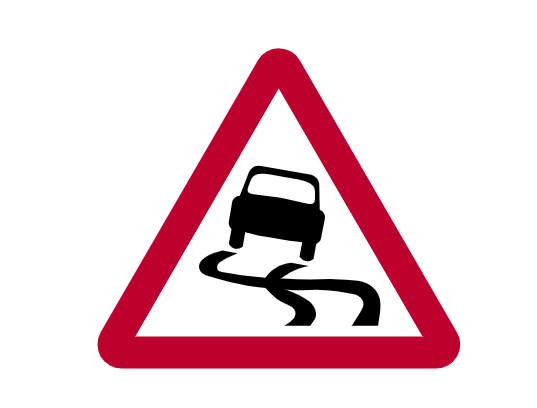
Which sign means SLIPPERY ROAD ahead?
The triangular warning sign with a car and skid marks means the road ahead may be slippery, especially in wet, icy, or muddy conditions.
What do triangular traffic signs indicate?
Triangular traffic signs are used to warn drivers about upcoming hazards, such as bends, junctions, or road conditions. They help drivers anticipate and react safely to changes ahead, unlike circular signs which give orders and rectangular signs which provide information.
If you miss your motorway exit, what is the MOST appropriate action?
Cross the central reservation.
Continue to the next exit.
Drive against the traffic flow.
Reverse on the hard shoulder.
The safest course of action when you miss your motorway exit is to continue to the next exit. Trying to correct your mistake by reversing or crossing the central reservation is extremely dangerous due to the high speed of traffic. 🚗💨
Why not the others?
Reverse on the hard shoulder — Reversing on the hard shoulder is illegal and dangerous due to oncoming traffic.
Cross the central reservation — Crossing the central reservation is illegal and extremely dangerous due to the high speed of traffic in both directions. ⛔
Drive against the traffic flow — Driving against the traffic flow is illegal and creates a very high risk of head-on collisions. ❌