UK Road Signs: Special & Miscellaneous Regulations
Free UK Road Signs Practice Test: Traffic Signs Theory Test UK
Free Practice Test & Recap of All UK Road Signs
Core Objective
Master complex, rare, and high-risk regulatory signals
Format Layout
3 to 4 Option Multiple-Choice
Real-Time Review
Instant answers with explanations
💡 What You Must Know:
This category includes additional specialized signs that appear in the official UK theory test. It covers signals from authorised persons, vehicle markings, and unique signs not found in other categories. They help ensure safety and smooth traffic management in special or less common situations across trams, level crossings, low bridges, and pedestrian systems. For example:
🚋 Tram route warning
⛔ Low bridge height limit
🚗 Traffic calming zone
🚦 Authorised officer signal
- You’ll answer questions related to less common but important UK road signs.
- Each question includes multiple-choice options, typically three or four.
- After selecting your answer, correct responses will be shown in green, incorrect in red.
- Explanations are provided for incorrect answers to help you understand these special-use signs.
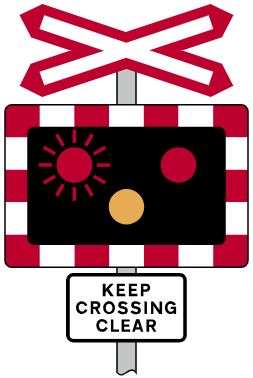
What should drivers do when red lights flash at an automatic open level crossing?
Proceed quickly.
Stop only if a train is visible.
Sound the horn.
Stop and wait.
Flashing red lights and alarms mean a train is approaching or passing; crossing is unsafe until they stop.
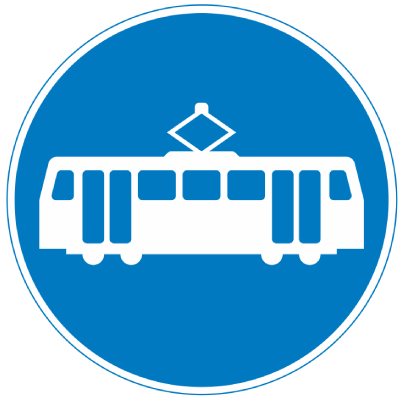
What does this sign indicate?
Route for trams with restrictions.
No entry for trams.
Tram stop ahead.
Route for trams only.
This blue circular sign indicates a mandatory route for trams only. If the route were also available to buses, taxis, or cycles, the sign would include their respective symbols or the word 'taxi'. Since none are shown, only trams are permitted to use this route.
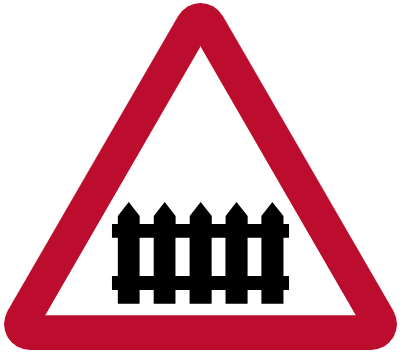
What does this sign indicate?
Pedestrian crossing ahead.
Level crossing with a gate or barrier.
Road closed ahead.
Tunnel entrance.
This sign warns drivers that there is a railway level crossing ahead with a gate or barrier. Drivers must be prepared to stop when the barrier is down or the warning lights are flashing. Always approach with caution and obey all signals.
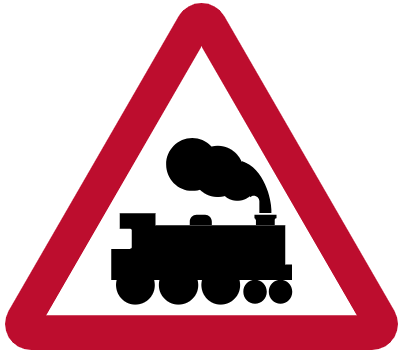
This sign indicates:
Controlled level crossing.
Dual carriageway.
Road closed ahead.
Open level crossing (no barriers).
Alerts drivers to a railway crossing that has no gates or barriers, so they must approach with extra caution.
What does this sign indicate?
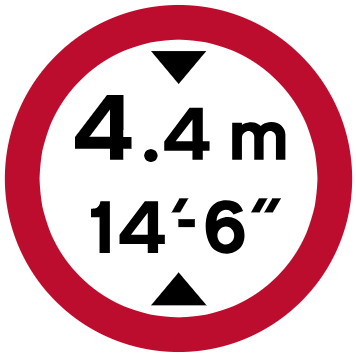
Maximum speed limit is 44 mph.
Minimum height of vehicles allowed.
No vehicles over the height shown may proceed.
Advisory height limit for heavy goods vehicles.
This red circular sign is a mandatory height restriction sign. It indicates that no vehicles taller than 4.4 metres (14 feet 6 inches) are allowed beyond this point. The height is shown in both metric and imperial units to ensure all drivers can understand the restriction. Vehicles exceeding the stated height must find an alternative route to avoid collisions, typically with low bridges or tunnels.
What do flashing pedestrian signals at a level crossing mean?
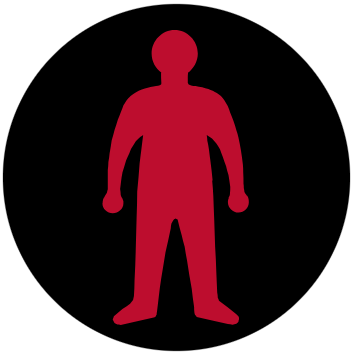
Cross quickly.
Crossing closed permanently.
Do not cross.
Trains have passed.
Flashing signals warn pedestrians that it is unsafe to cross and they must stop at the marked line.
What is the purpose of the 3-bar countdown markers?
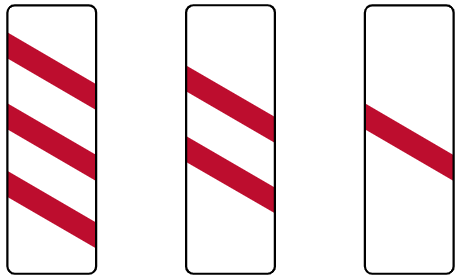
Show when to accelerate.
Show a diversion route.
Indicate a no-overtaking zone.
Warn you you’re getting closer to the crossing.
Countdown markers may be provided on the approach to a crossing. These divide the distance between the advance warning sign and the stop line into 3 equal parts; each sloping bar does not necessarily represent a distance of 100 yards.
What does this sign instruct drivers of long, low vehicles to do?
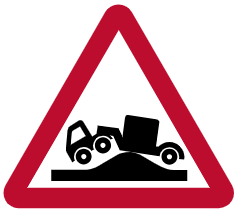
Use an alternative route.
Call before crossing due to grounding risk.
Stop and wait for a green light.
Follow the diversion only.
Long low vehicles may get stuck on the crossing, so drivers must phone the signal operator before crossing.
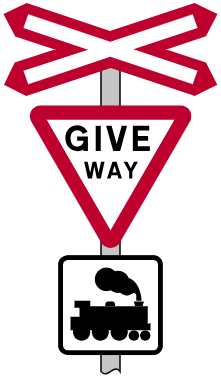
What does this open level crossing sign warn drivers about?
Uncontrolled railway crossing.
Barriers close automatically.
Crossing has flashing lights.
Road closed ahead.
The sign shows a level crossing with no gates, barriers, or signals, so drivers must give way to trains.
What does this sign warn high vehicles about?
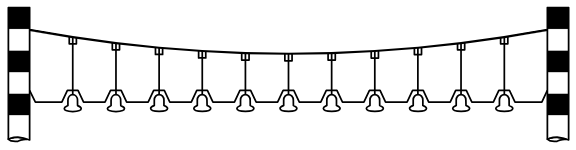
Electrified cables – height alarm.
Tunnel ahead.
Low bridge.
Narrow road.
Bells above the road alert over-height vehicles that they are too tall to safely pass under electrified overhead cables at a railway crossing.
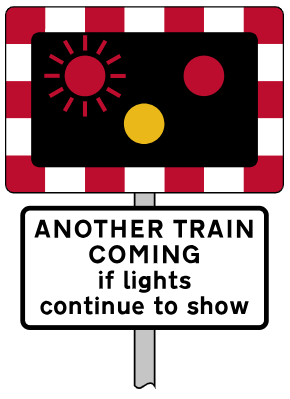
What do these signals at a level crossing mean?
Train has passed, proceed immediately.
Stop when red lights flash.
Continue if no train is visible.
Lights indicate a speed limit.
Flashing red lights mean you must stop as a train is approaching or the crossing is active.
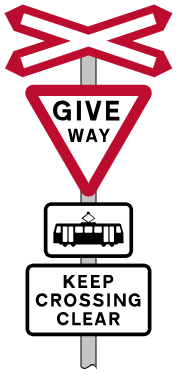
What does this sign represent?
Drivers must stop for all approaching traffic.
Trams must give way to road vehicles.
Drivers must give way to trams at the crossing.
Only emergency vehicles may cross.
This sign is used at tram level crossings where there are no barriers, gates, or traffic lights. The 'Give Way' sign combined with a tram symbol plate and a 'Keep Crossing Clear' notice informs road users that trams have priority. Drivers must give way to trams and ensure the crossing is clear before proceeding.
Why is this sign placed on the road?
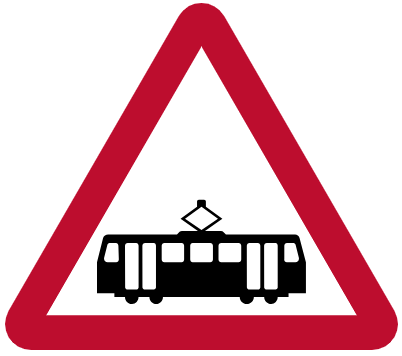
To show a tram stop.
To mark a bus-only area.
To warn of trams crossing ahead.
To indicate a level crossing.
It ensures drivers are aware of potential tram movements across the road.
What do these lane control signals indicate to drivers?
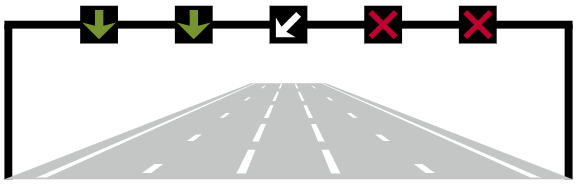
All lanes are open for use.
The right lanes are not for overtaking.
Drivers should stay in the lane with the white arrow.
A red cross means that the lane is closed.
A red cross on a lane control signal means the lane is closed to traffic, and drivers must not proceed in that lane; they should safely change lanes as indicated by other signals (such as a white diagonal arrow pointing left or a green arrow showing open lanes).
These markings along the road indicate:
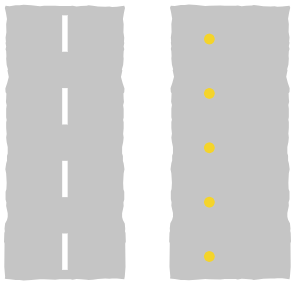
Cycle lane.
Tram swept path.
Parking restriction.
No entry.
Drivers must avoid the marked path as trams need this space to maneuver safely.
What does this sign mean?
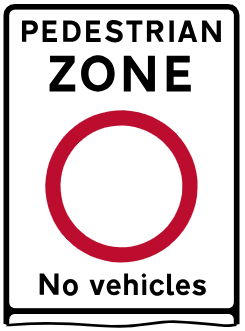
No entry for All vehicles, including pedal cycles.
No entry for buses only.
No entry for cars only.
Only ridden pedal cycles allowed.
The sign prohibits all vehicles, including ridden pedal cycles, from entering the area.
This sign at a level crossing means:
Drivers must give priority to trams.
No trams will pass.
Change lanes immediately.
Trams must give way to cars.
The ‘give way’ sign with a tram plate tells drivers to let trams cross first.
What does a diamond-shaped speed limit sign indicate?
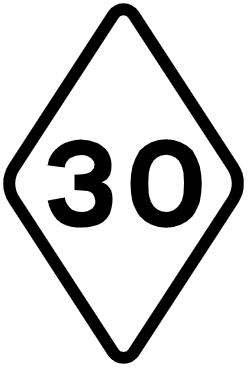
Speed limit for all vehicles.
Parking restriction.
Speed limit for tram drivers only.
Number of tram stops.
Speed limit sign for tram drivers shown in kilometres per hour. All diamond-shaped signs are for tram drivers only.
What does this stop line indicate?
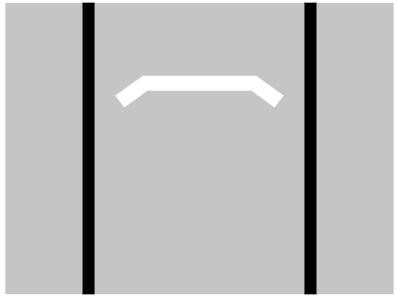
Stop line for trams only.
Stop line for all vehicles.
Pedestrian stop line.
Bus stop line.
This line shows where trams must stop at traffic signals on a lane not shared with other vehicles.
Drivers should enter a yellow box at a level crossing only when:
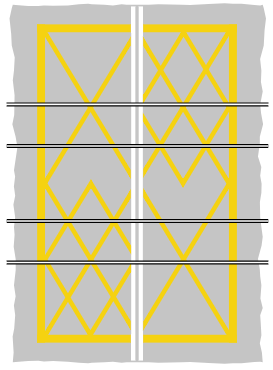
They need to change lanes.
The exit is completely clear.
They are following a large vehicle.
The lights are flashing.
Entering is safe only if you can drive out of the marked box without stopping.