UK Road Signs: Integrated Transit Test
Free Bus & Cycle Signs Practice Test: Traffic Signs Theory Test UK
Free Practice Test & Recap of Public Transit & Cycle Lanes
Core Objective
Identify route permissions & access restrictions
Format Layout
3 to 4 Option Multiple-Choice
Real-Time Review
Instant answers with explanations
💡 What You Must Know:
Bus and cycle signs are included in the official UK theory test. These signs show areas or lanes reserved for buses, bicycles, or both. They help ensure the safe and proper use of bus stops, cycle lanes, and shared paths. You’ll often see clear road markings and symbols that indicate who can use each lane and when. For example:
🚴 Cycle lane ahead
🚌 Timed bus lane operation
↔️ Shared pedestrian/cycle path
🔄 End of designated lane
- You will practise questions related to bus and cycle lane signs and markings.
- Each question presents three or four answer choices to test your knowledge.
- After selecting an answer, the system will highlight correct options in green and incorrect ones in red.
- If your answer is incorrect, an explanation will help clarify the rule or restriction shown by the sign.
What does this sign indicate?
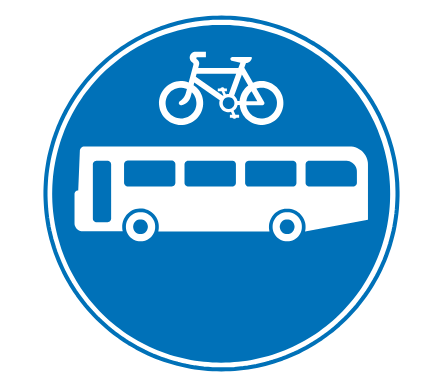
Route for buses, pedal cycles, and taxis only.
Buses and pedal cycles must not use this route.
Route exclusively for buses and pedal cycles.
Shared route for buses, cycles, and motorbikes.
This sign indicates that the route is exclusively for buses and pedal cycles. No other vehicles - including taxis or motorbikes - are permitted to use this route.
What does it mean when the word ‘local’ appears on the bus symbol?

Any vehicle designed to carry 10 people may use the lane.
Other vehicles may enter and stop in a bus lane to load and unload.
Buses running a local service may not use the lane.
Only buses running a local service may use the lane.
When the word ‘local’ is shown on the bus symbol, only buses providing a local service are allowed to use the lane. This excludes long-distance coaches or other large vehicles not running a local route.
This sign indicates:
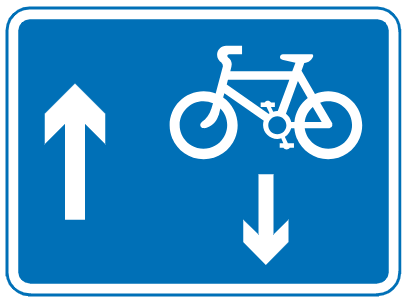
Pedal cycles permitted to ride contraflow.
Cycle lane ends.
No entry for cyclists.
End of one-way street.
This sign indicates that pedal cycles are allowed to travel in the opposite direction to the one-way traffic flow. It warns drivers to be cautious, as cyclists may legally approach from ahead on a street that is otherwise one-way for motor vehicles.
What does this sign indicate?
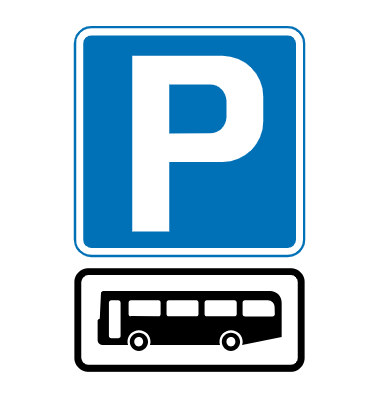
Parking place for buses only (no time limit).
Parking place for buses only with a time limit.
No parking allowed for buses.
Parking place only for buses with more than 8 passengers (excluding driver).
This sign designates a parking area for buses only, and unless a time limit is indicated on a supplementary plate, there is no time restriction for parking.
What is the meaning of this symbol?
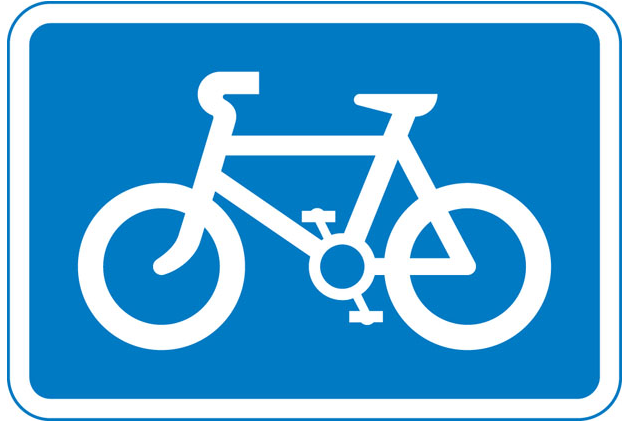
Cycle lane ends.
Cycle-only route.
No cycling allowed.
Cycle parking ahead.
This sign indicates a route exclusively for cyclists. Motor vehicles and pedestrians must not use it.
What does this sign indicate?
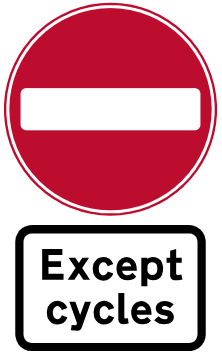
No entry for bicycles.
No entry for all vehicles including cycles.
One-way street only.
No entry for vehicular traffic except pedal cycles.
This sign indicates that motor vehicles are prohibited from entering the road, but pedal cycles are allowed. Cyclists may travel through, while all other vehicles must not enter.
What does this sign indicate?
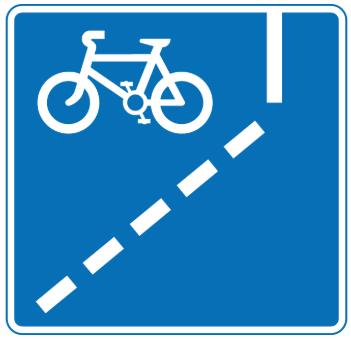
End of cycle lane.
Shared path for cyclists and pedestrians.
Cycle lane for two-way traffic.
Mandatory with-flow pedal cycle lane ahead.
This sign warns drivers that a mandatory cycle lane is ahead, and cyclists will be travelling in the same direction as traffic. Motor vehicles must not enter or park in this lane during its times of operation.
What does this sign indicate?
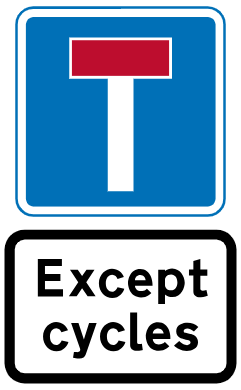
No entry for pedal cycles.
Through road for all vehicles.
No through road except for pedal cycles.
One-way street.
This sign indicates that the road is a dead end for motor vehicles, but pedal cycles are allowed to pass through. Cyclists can continue along the road, while other vehicles must turn around.
What does this sign represent?
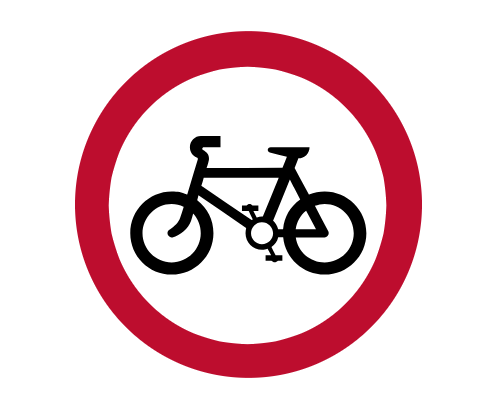
Pedal cycles must be ridden with caution.
Pedal cycles may be parked here.
Riding pedal cycles is prohibited.
Pedestrians and cyclists share this route.
This sign means riding of pedal cycles is not allowed. It’s a prohibition sign, indicated by the red circle around the bicycle symbol.
What is the name of this sign?
Parking not allowed for buses.
Parking place for buses only.
Bus refuelling zone.
Bus inspection checkpoint.
This sign shows a bus symbol on a blue background, indicating a parking area reserved exclusively for buses. There is no time restriction, meaning buses may park here for as long as necessary. Other vehicles are not allowed to use this parking space.
What does this sign indicate?
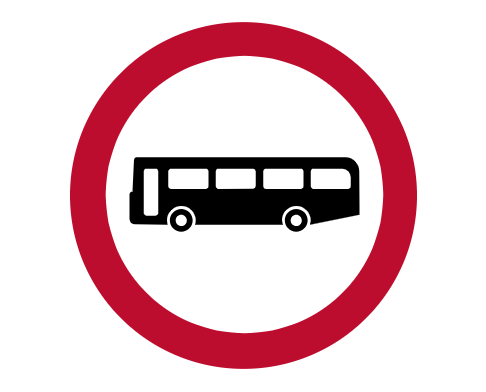
Entry for vehicles with more than 8 passengers.
No entry for vehicles with more than 8 passengers.
Only long-distance coaches are allowed.
No restrictions apply to passenger-carrying vehicles.
This sign indicates that vehicles designed to carry more than 8 passengers (excluding the driver) are not allowed. This restriction typically applies to large minibuses and coaches, unless they are local buses.
What does this sign represent?
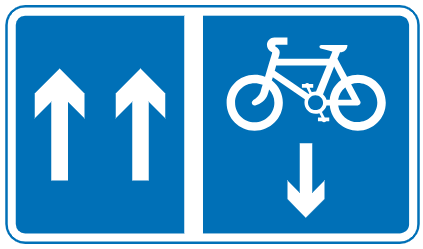
Mandatory cycle lane ending soon.
Mandatory contraflow pedal cycle lane.
Shared cycle and pedestrian route.
Two-way cycle track ahead.
This sign indicates a mandatory contraflow cycle lane, meaning cyclists travel against the flow of traffic on a one-way street. Motor vehicles must not enter or use this lane.
This sign indicates:
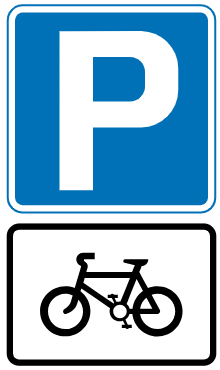
Pedal cycle parking place.
No parking for pedal cycles.
No through road.
Riding of pedal cycles prohibited.
This sign shows a parking area reserved for Pedal cycles. Other vehicles are not allowed.
What does this road marking indicate?
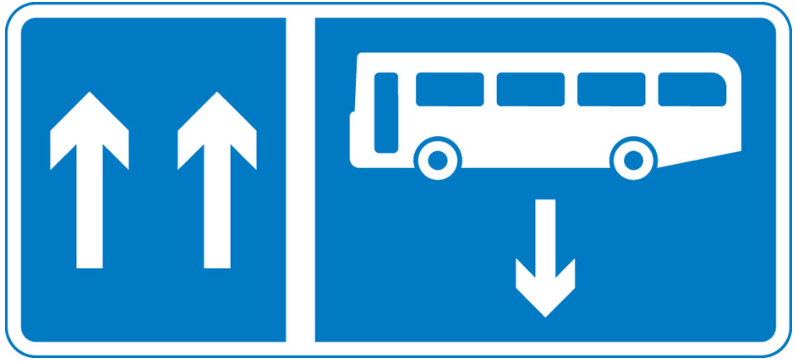
No entry for buses.
Bus stop.
Bus parking area.
Bus lane.
This marking indicates a contraflow bus lane, where buses (and sometimes cycles) are allowed to travel in the opposite direction to other traffic on a one-way street or section of road. Other vehicles must not use this lane.