UK Road Signs: Parking & Markings Test
Free Parking & Road Marking Signs Practice Test: UK Traffic Signs Theory Test
Free Practice Test & Recap of Waiting Restrictions
Core Objective
Master waiting restrictions & bay rules
Format Layout
3 to 4 Option Multiple-Choice
Real-Time Review
Instant answers with explanations
💡 What You Must Know:
Parking signs and road markings are tested in the official theory exam. They show where, when, and how long you can park your vehicle. These signs may indicate limited parking hours, restricted zones, or permit-only areas. Markings on the road often support or reinforce what the signs display. For example:
🅿️ ⏳ Time limited parking
🆔 🚗 Permit holders only
🔁 📦 Loading only area
↕️ 🪙 Pay-and-display zone
- You will practice questions focused on parking signs and related road markings.
- Each question offers a choice of three or four possible answers.
- Once you choose an option, correct answers are shown in green, and incorrect ones in red.
- If your answer is wrong, an explanation will guide you through the correct rule.
Who is this on-street parking place for?
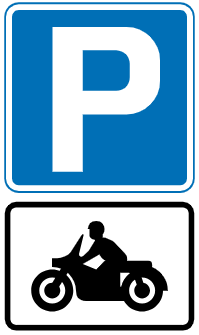
Solo motorcycles.
No solo motorcycles.
Bicycles only.
This marking indicates an on-street parking space reserved exclusively for solo motorcycles.
What does this sign indicate?
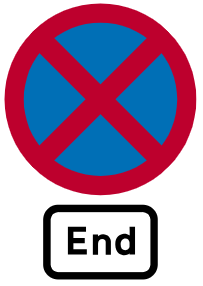
End of 24-hour clearway.
End of carriageway.
End of speed limit area.
This sign marks the end of a 24-hour clearway, meaning vehicles may now stop on the carriageway according to normal parking and stopping rules.
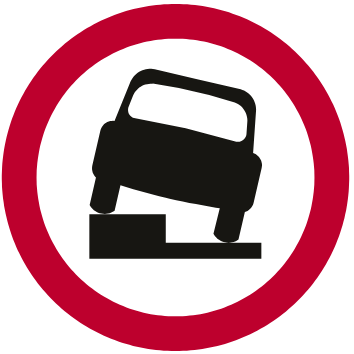
What does this sign signify?
Park partially on verge/footway.
No parking on verge/footway.
End of verge/footway parking.
This sign indicates that parking on the verge or footway is prohibited, and vehicles must remain on the carriageway or in designated parking bays.
What does this parking sign represent?
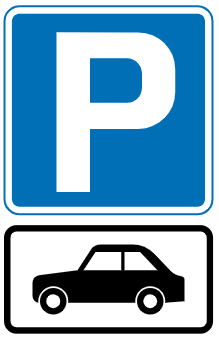
Motor cars.
No motor cars.
Disabled badge holders.
This sign indicates a designated parking area specifically for motor cars. It means cars are allowed to park in this bay. It does not indicate a restriction (like “no motor cars”) and it is not reserved for disabled badge holders.
What does the red cross on this sign indicate?
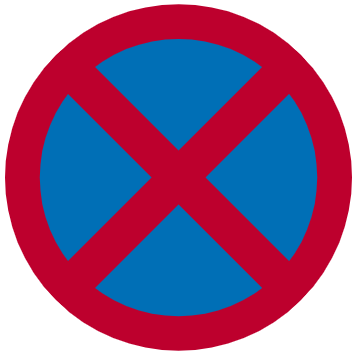
No waiting.
No stopping.
No parking.
The red cross indicates no stopping at all, not even to pick up or set down passengers. 'No waiting' or 'No parking' are less restrictive and do not include stopping briefly for passengers.
When waiting restrictions apply, what is true about verges?
Parking is allowed on the verge.
Waiting restrictions still apply to the verge.
Only double yellow lines restrict verge parking.
Verges are not considered part of the highway.
Waiting restrictions are indicated by signs and road markings. The restrictions usually apply to the whole of the highway, including verges and footways.
What does this sign represent?
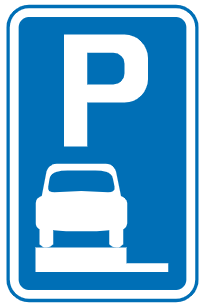
Park partially on verge or footway.
Park entirely on verge or footway.
Not allowed on verge or footway.
This sign allows vehicles to be parked entirely on the verge or footway, keeping the main carriageway clear. Drivers must avoid obstructing pedestrians or causing damage.
What does this parking sign represent?
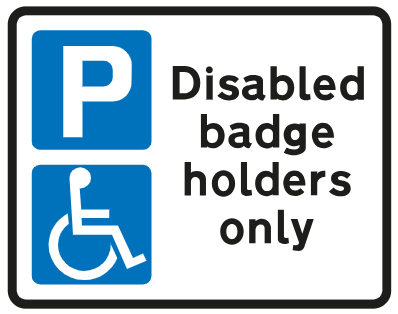
No parking for disabled drivers.
Parking for disabled badge holders only.
Parking for all vehicles at all times.
This sign indicates parking reserved exclusively for disabled badge holders at all times. Only vehicles displaying a valid Blue Badge may park in this bay. Other vehicles are not permitted to use the space.
What is the meaning of this road sign with a yellow background?
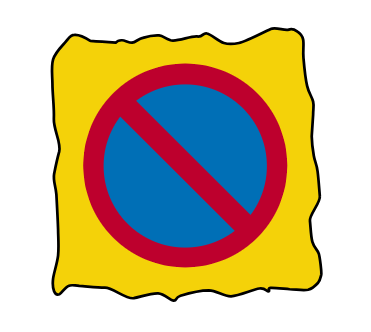
No entry.
No stopping.
No waiting.
No overtaking.
The yellow background signals a temporary traffic regulation, while the blue circle with a red border and slash represents no waiting. Combined, this indicates temporary no waiting.
What is the meaning of sign symbol?
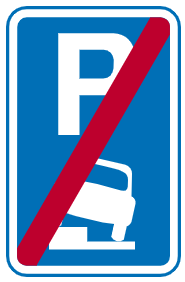
End of verge or footway parking.
Start of verge or footway parking.
Parking allowed partially on verge or footway.
This sign indicates that the provision for parking on the verge or footway has ended, and vehicles must now park only on the carriageway or designated bays.
What does a single red line on the road indicate?

No stopping at any time.
Parking allowed only for permit holders.
No stopping during the days and times shown.
A single red line indicates that vehicles must not stop during the specified days and times shown on the accompanying upright sign. Outside these times, stopping is permitted.
What does this parking sign signify?
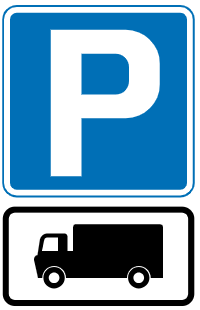
Goods vehicles.
No goods vehicles.
Goods vehicles only (with permit).
This sign indicates a designated parking area for goods vehicles. It means that goods vehicles are allowed to park in the marked bay. It does not mean goods vehicles are prohibited, and it is not a permit-only restriction unless another plate is displayed.
What does this sign/marking indicate?

No stopping on the carriageway.
Loading bay only.
Parking bay with individual spaces.
Disabled parking area only.
This marking indicates a designated parking bay divided into individual spaces, positioned parallel to the kerb.
How long can disabled badge holders typically park in areas with waiting restrictions?
Up to 1 hour anywhere.
Indefinitely across the UK.
Up to 3 hours in England, no limit in Scotland.
Not allowed to park at all.
Blue Badge holders can usually park for up to 3 hours, or without a time limit in Scotland, under certain conditions.
What does this sign indicate?
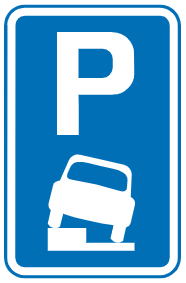
Parking allowed partially on the verge or footway.
Parking only on the carriageway.
No parking allowed on the verge.
This sign indicates that vehicles may be parked partially on the verge or footway, allowing the main carriageway to remain clear. Drivers must ensure they do not obstruct pedestrians or cause damage.
Which of these is true about the road marking shown?
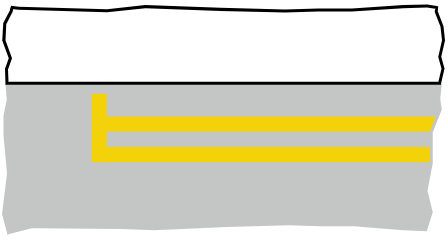
It permits short stops for loading.
It restricts parking but allows waiting.
It prohibits waiting at all times.
It applies only on weekdays.
Waiting prohibited 24 hours a day, 7 days a week, throughout the year. Yellow plates are no longer used where the restriction applies all year round.
What does this marking represent?

No parking at any time.
Parking only for permit holders.
Continuous parking bay adjacent to the kerb.
Disabled parking spaces only.
This marking indicates a continuous parking bay running along the kerb without individual space divisions.
What does this road marking and sign indicate?
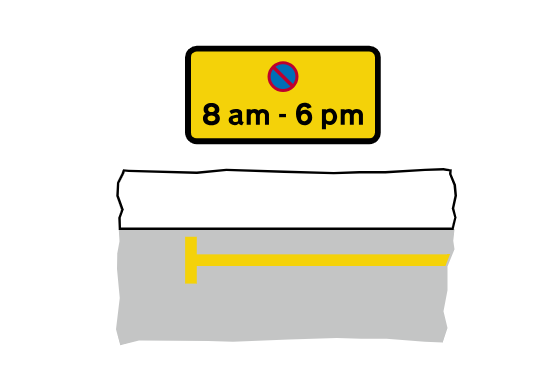
Waiting allowed during the times shown.
Waiting prohibited during the times shown.
Loading permitted during the times shown.
Stopping allowed during the times shown.
The single yellow line along the edge of the road indicates that waiting is prohibited during the times shown on the sign (in this case, 8 am – 6 pm). Outside of these hours, waiting is allowed. This restriction does not necessarily affect loading or unloading, unless additional signage states otherwise.
What does this sign indicate?
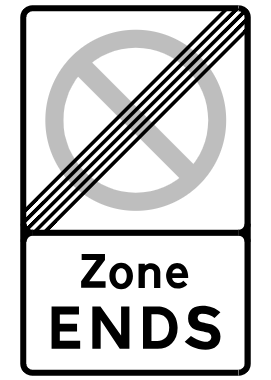
End of restricted parking zone.
Start of restricted parking zone.
Parking allowed for permit holders only.
This sign indicates the end of a restricted parking zone, meaning normal parking rules now apply beyond this point.
What do double red lines on the road mean?

No stopping at any time.
No waiting at any time.
No parking at any time.
Double red lines indicate that vehicles must not stop at any time, including to pick up or drop off passengers. This is stricter than single or double yellow lines.