UK Road Signs: Road Works Signs Test
Free Road Works Signs Practice Test: Traffic Signs Theory Test UK
Free Practice Test & Recap of All Road Works Signs
Core Objective
Recognise dynamic construction & hazard signs
Format Layout
3 to 4 Option Multiple-Choice
Real-Time Review
Instant answers with explanations
💡 What You Must Know:
Road works signs are included in the official UK theory test. They warn drivers about construction zones and temporary road changes. These signs may indicate lane closures, diversions, or other short-term hazards. They are usually diamond-shaped or rectangular with orange or yellow backgrounds. For example:
🚧 Roadworks ahead
🔁 Diversion route
⚠️ Uneven surface
🚦 Temporary lights
- You will answer questions related to road works and temporary traffic signs.
- Each question provides a set of multiple-choice answers (three or four options).
- After making a selection, you’ll see whether your answer is right (green) or wrong (red).
- If incorrect, an explanation will help you understand the sign’s meaning.
What does this sign signify?
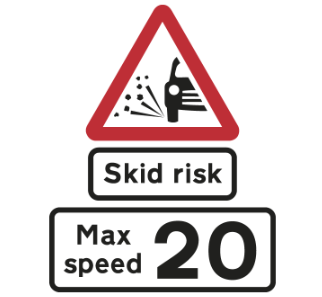
Slippery road – maximum 20 mph advised.
Loose gravel – no speed restriction.
Roadworks ahead – 20 mph limit.
End of speed restriction.
This sign warns drivers of a risk of skidding due to loose chippings on the road and advises a maximum speed of 20 mph to drive safely.
Which statement best describes this sign?
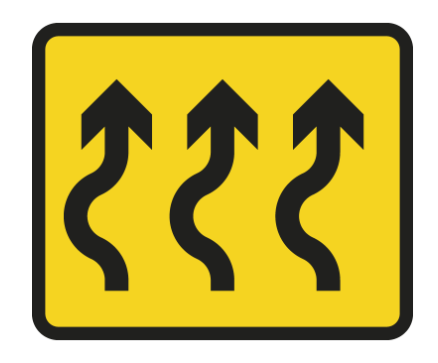
Temporary route with sharp bends ahead.
Bends on a hilly road ahead.
End of dual carriageway ahead.
Lane reduction due to roadworks ahead.
This sign warns of sharp bends ahead where traffic is temporarily diverted onto another road. The number of lanes remains unchanged, but drivers should reduce speed and prepare for the deviation.
What does this sign represent?
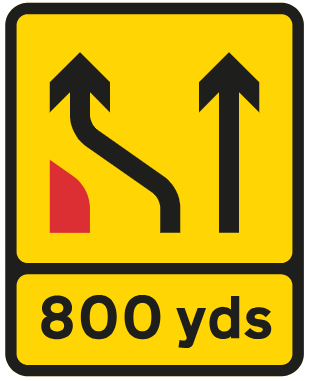
Narrow lanes ahead.
Lane closure.
Lanes return to normal width.
Hard shoulder closed.
This sign shows that previously narrowed traffic lanes now revert to their standard width.
What does this sign indicate?

Area closed to all traffic.
Pedestrians only beyond this point.
Road open but with narrow lanes.
Vehicles only beyond this point.
This sign is used with barriers to show that a section of the highway is completely closed to both vehicles and pedestrians.
What is the meaning of sign symbol?
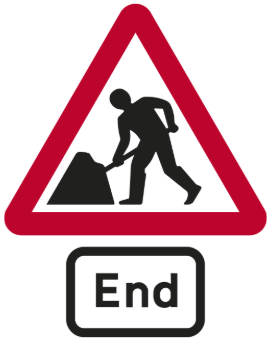
Diversion ends.
End of road works and temporary speed limit begins.
End of road works NOT including speed limits.
End of road works including speed limits.
This sign indicates the end of road works and the end of all associated temporary restrictions, including temporary speed limits.
What does this sign show during road works?
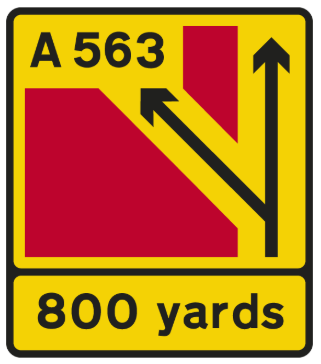
Exit available from within road works.
All junctions closed.
Emergency exit only.
Motorway ends ahead.
The sign shows that a junction can still be accessed from within the road works area. The style of numerals depends on whether the road is a motorway or an all-purpose road, and the black patch indicates the motorway junction number.
What is the purpose of this sign?
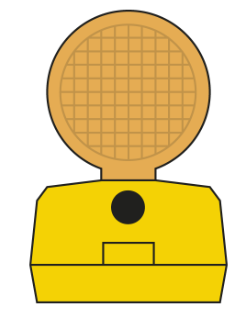
A permanent road divider.
A roadworks signal.
A temporary road obstruction.
A no-parking zone.
This is a road danger lamp used to highlight the limits of a temporary obstruction, especially at night or during poor visibility.
What are traffic cones used for?
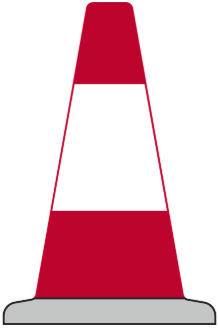
To mark the edge of the route.
To show a permanent lane closure.
To indicate a no-parking zone.
To mark the start of a diversion only for cyclists.
Traffic cones are used to guide vehicles or pedestrians safely around or past a temporary obstruction by marking the edge of the available route.
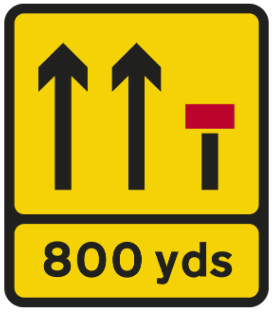
What does this sign indicate about the traffic lanes ahead?
All lanes are open to traffic.
Only buses may use the open lanes.
The road becomes a one-way street.
The red-marked lane is closed ahead.
The red bar shows that the lane is closed ahead, while the remaining lanes are open to all traffic.
What does this sign indicate?
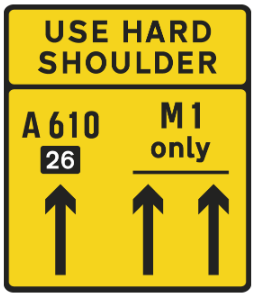
Hard shoulder used as an exit lane.
Hard shoulder closed.
Exit lane closed ahead.
Hard shoulder used for emergencies only.
This sign shows that the hard shoulder is temporarily being used as an exit lane at a junction, usually during road works or when lane layouts are altered.
What does this sign represent?
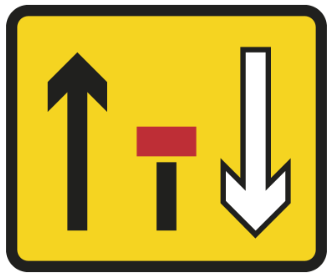
All roads closed completely.
Centre of the road is temporarily closed.
Sharp deviation of route.
Additional traffic lane available.
This sign indicates that, on a single carriageway with more than two lanes, a lane in the center is temporarily closed, usually due to roadworks or a temporary obstruction.
What does this sign mean?

Sharp deviation of route to the left.
Road closed ahead.
Slippery road.
Main carriageway lane closure.
This sign warns drivers of a sharp deviation in the route due to road works or a temporary obstruction. The chevrons indicate the direction of the deviation.
What does this sign indicate?
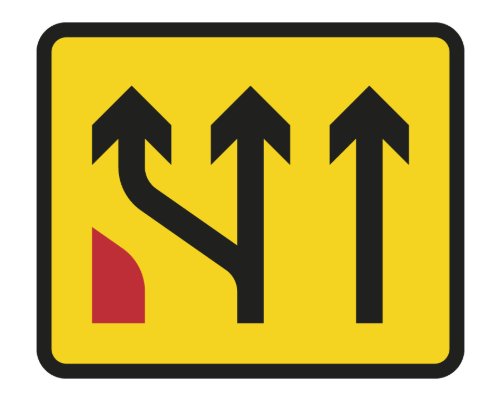
Lane closed ahead due to roadworks.
Additional lane ahead.
End of temporary speed limit.
Road narrows from the left.
This sign shows that an extra traffic lane will be available ahead as part of a temporary traffic management scheme, often seen near roadworks to ease congestion.
What is the name of this sign?
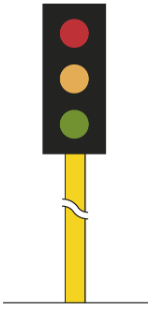
Stop sign ahead.
Portable traffic lights controlling traffic.
Permanent traffic signals ahead.
Pedestrian crossing only.
This sign indicates that portable traffic lights are in operation to control vehicular traffic, often used in temporary roadworks or events.
What does this sign indicate?
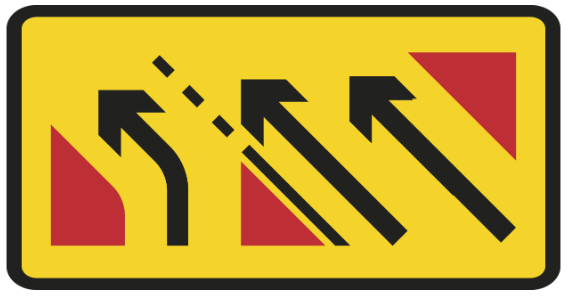
Information for drivers on a slip road.
Main carriageway lane closure.
Hard shoulder ahead.
Exit closed.
This sign provides information specifically to drivers on a slip road, such as directions, lane usage, or upcoming junctions.
What is the meaning of sign symbol?
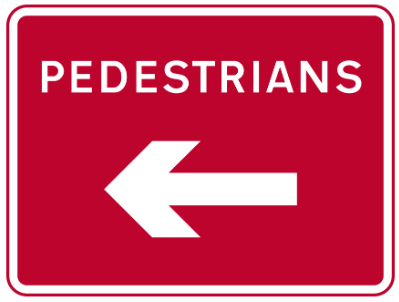
Footpath closed.
Temporary route for pedestrians.
Pedestrian crossing ahead.
Permanent route for pedestrians.
This sign indicates a temporary pedestrian route, usually provided around road works or obstructions, to allow safe passage for pedestrians.
What does this sign indicate?
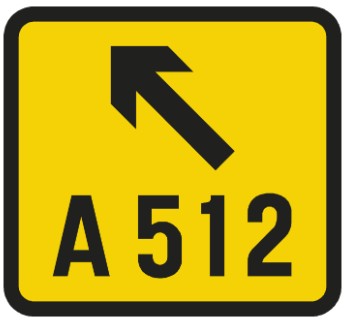
Hard shoulder exit.
Lane closure ahead.
Exit leaves main route.
Start of contraflow.
These signs mark the point where the exit route branches off from the main carriageway. The upper sign is used on motorways, and the lower sign on all-purpose roads.
Identify the sign that represents a lane drop.
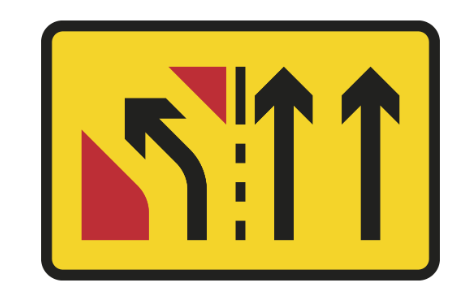
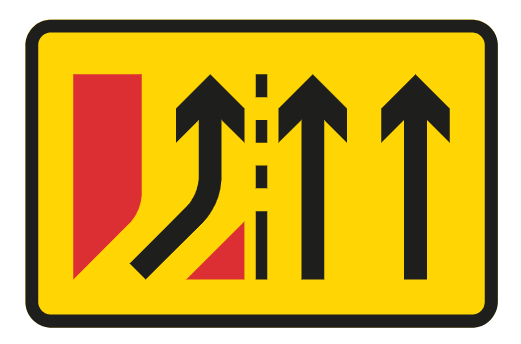
This sign indicates a lane drop where the left-hand lane becomes the exit slip road. The permanent layout would be a lane diverge with a deceleration lane, with all 3 lanes continuing along the main carriageway.
What is the name of this sign?
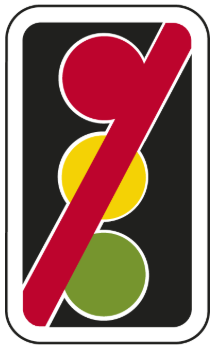
Traffic signals not in use.
Permanent traffic lights ahead.
Pedestrian crossing only.
Stop sign ahead.
This sign warns drivers that the traffic signals at the junction or crossing are not operational, and normal priority rules apply.
What does this sign indicate about the lanes ahead?
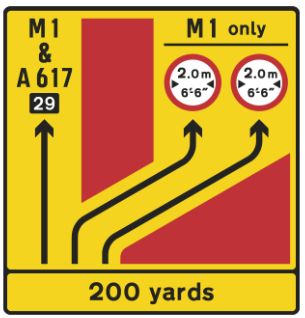
Traffic lanes divide ahead.
All traffic must exit at the next junction.
End of dual carriageway.
Right lane is closed ahead.
The sign shows that the lanes split ahead. The left lane leads to a junction but may also be used by traffic continuing on the motorway, while the right-hand lanes move to the right. Red areas indicate sections closed to traffic.
What does this hand-held sign indicate?
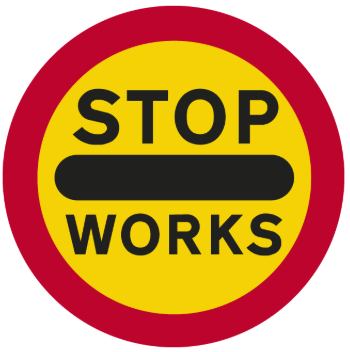
Stop for traffic control during works.
Road permanently closed.
Pedestrian crossing ahead.
Hard shoulder in use.
This hand-held sign is used during road works to temporarily stop vehicular traffic. Drivers must not proceed past the sign while it is displayed.
What is the name of this sign?
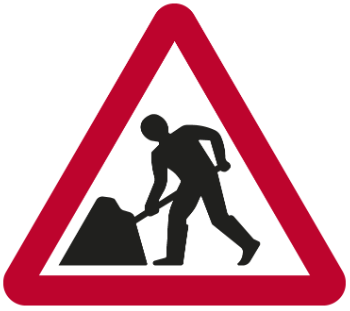
Road works ahead.
Obstruction area ended.
Diversion ahead.
Accident ahead.
This sign warns drivers of road works or an obstruction in the carriageway ahead. It can apply to any type of works, from major construction projects to minor maintenance.
What are traffic cylinders used for in a contraflow system?

To separate opposing traffic.
To indicate the end of the contraflow system.
To show a lane is closed permanently.
To mark a pedestrian-only route.
In a contraflow system, traffic cylinders are placed between lanes to safely separate vehicles travelling in opposite directions.