UK Road Signs: Motorway Regulations Test 1 of 2
Free Motorway Signs & Markings Practice Test 1: UK Traffic Signs Theory Test
Free Practice Test & Recap of Motorway Regulations
Core Objective
Master lane discipline & structural regulations
Format Layout
3 to 4 Option Multiple-Choice
Real-Time Review
Instant answers with explanations
💡 What You Must Know:
Motorway signs and markings are a key part of the official theory test. They help drivers navigate motorways safely by showing lane directions, speed rules, and upcoming exits. Road markings assist with safe lane discipline. These signs use unique symbols with distinctive blue backgrounds and white text. For example:
🛣️ Motorway begins
↗️ Lane directions / merges
⬅️ Exit with junction No.
📏 Surface distance markers
- You’ll answer questions focused on motorway signs and road markings.
- Each question provides three or four choices to select from.
- After selecting your answer, the correct one will appear in green, and the incorrect in red.
- If you get a question wrong, an explanation will help you understand the correct motorway rule or sign.
Where is this sign located?
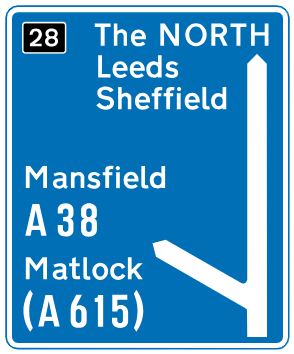
At the start of the deceleration lane.
On the main carriageway before the slip road.
At the motorway exit only.
At the start of the acceleration lane.
This sign is placed at the beginning of the deceleration lane on a motorway and shows destinations that can be reached by staying on the motorway, helping drivers choose the correct lane in advance.
In countdown markers, what distance does each bar represent?
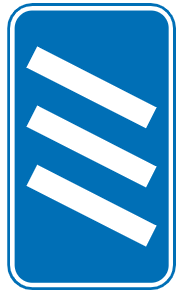
50 yards.
100 yards.
200 yards.
300 yards.
Each bar on a countdown marker represents approximately 100 yards, helping drivers gauge how far they are from the start of the deceleration lane.
What does this overhead sign show?
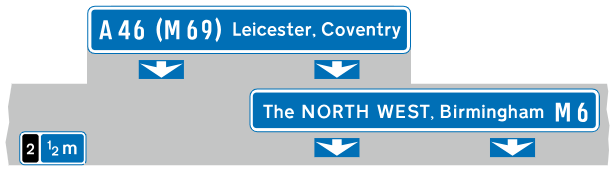
Speed limits for each lane.
Different destinations.
End of motorway regulations.
Lane closures ahead.
This overhead sign indicates which lanes drivers should use for their intended destinations, helping with safe and correct lane selection.
What is the meaning of this sign?
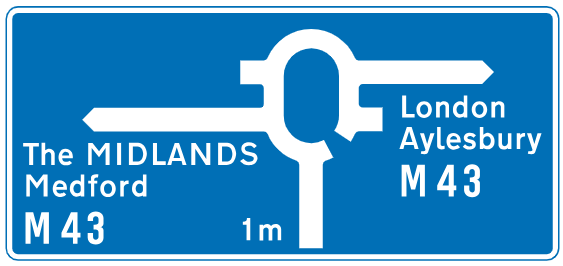
Motorway ends – junction with another motorway.
Motorway ahead.
Temporary diversion.
Motorway continues.
This sign warns drivers that the motorway ends and merges with another motorway at the upcoming junction. Drivers should adjust lanes and speed accordingly.
What is the meaning of this sign?
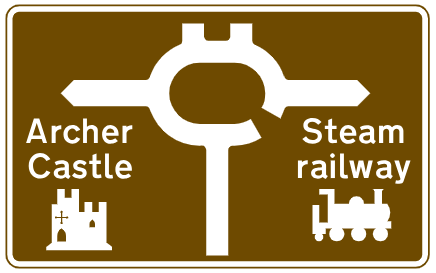
Directions to tourist attractions.
Locations of service stations.
End of motorway.
Indicates a motorway junction only.
The sign provides directions from a roundabout on the slip road to nearby tourist attractions.
What does a sign mounted at the side of the motorway show?
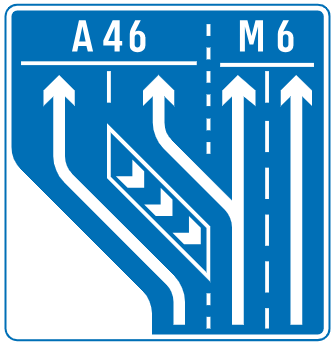
Speed limit changes.
Upcoming services.
The arrangement of traffic lanes.
End of motorway.
This sign displays how the traffic lanes are arranged ahead, helping drivers choose the correct lane in advance.
What is the typical colour scheme for motorway signs?
Green with yellow text.
Blue with white text.
White with red text.
Brown with green text.
Most motorway signs have a blue background with white lettering, numbers and borders. Tourist destinations, however, are shown with brown backgrounds.
What does the motorway number in brackets on a blue background indicate?
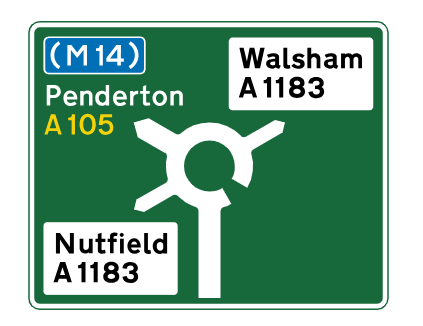
You are already on the motorway.
Direct entry to the motorway from this junction.
The motorway is closed ahead.
Route ahead to reach the motorway.
A motorway number in brackets on a blue background indicates the route to take from a junction ahead to reach the motorway. It does not mean the motorway is directly accessible from this junction.
What does a sign showing directions from a roundabout ahead indicate?
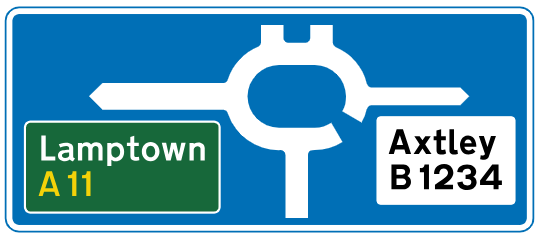
The roundabout is closed.
The exits and destinations at the upcoming roundabout.
Traffic must stop before entering.
It shows the speed limit for the roundabout.
This sign shows which destinations can be reached from each exit of the upcoming roundabout, helping drivers choose the correct lane and exit.
Which of the following actions is permitted on a motorway in an emergency situation?
Stopping anywhere.
Making a U-turn.
Reversing.
Stopping on the verge.
In an emergency, you're allowed to stop on the hard shoulder or verge. All other actions—such as U-turns, reversing, or stopping in live lanes—are strictly prohibited on motorways.
What does this overhead sign indicate?
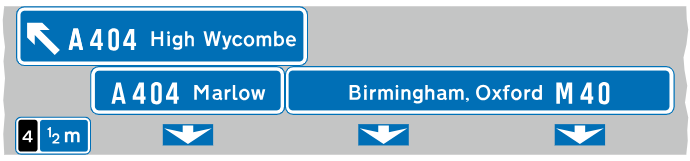
Only one exit ahead.
A junction with two exits.
Motorway ends ahead.
All traffic must leave the motorway.
This overhead sign shows a junction with two exits. The first exit has a deceleration lane, shown at the top of the sign. The second is a lane drop, meaning the left lane leaves the motorway. Traffic continuing on the motorway should stay in the centre or right lanes.
What should drivers expect when they see this sign?
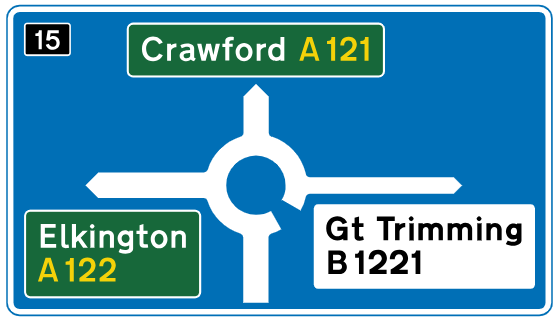
Motorway continues after junction.
Motorway ends at a junction with an all-purpose road.
Lane closure on motorway.
Start of acceleration lane.
The sign indicates that drivers will leave the motorway and continue on an all-purpose road at the junction.
What information does this sign provide?
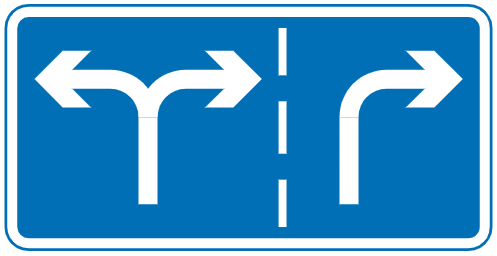
Lane guidance for junction turns.
Road narrows ahead.
Slip road only.
Roundabout entry only.
The sign helps drivers choose the correct lane for the intended direction at the upcoming junction.
What does this sign mean for drivers on the slip road?
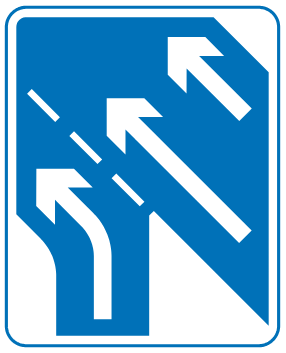
You must stop before joining the motorway.
The slip road continues as a separate lane.
This lane will merge with the main carriageway.
Right-turn ahead onto the motorway.
The sign shows that traffic on the slip road will merge into a lane on the main carriageway, so drivers must adjust speed and join safely.
What does this sign represent?
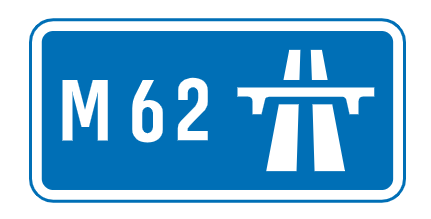
End of motorway regulations.
Entry to a dual carriageway.
Start of motorway regulations.
Start of roadworks ahead.
This sign shows the start of motorway regulations. It indicates you are entering a motorway, where specific rules apply.
Which of these vehicles is allowed to use the motorway?
An agricultural vehicle.
A pedal cycle.
A motorcycle over 50 cc capacity.
A motorcycle under 50 cc capacity.
Motorways must not be used by certain classes of traffic, including invalid carriages under 254 kg unladen weight, pedal cycles, motorcycles under 50 cc capacity, agricultural vehicles, and vehicles incapable of reaching 25 mph on level ground. Pedestrians and animals are also prohibited. However, motorcycles over 50 cc capacity are permitted on motorways.
What do countdown markers indicate?
Distance to the start of the acceleration lane.
Distance to the next junction.
Distance to the start of the deceleration lane.
Distance to the end of the motorway.
Countdown markers show the distance remaining to the start of a deceleration lane. Each bar on the sign represents approximately 100 yards, helping drivers prepare to slow down safely.
What is represented by this sign?
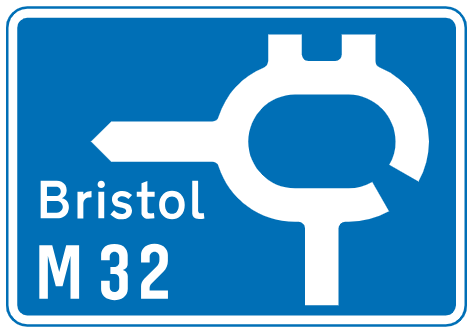
All lanes closed ahead.
Local road roundabout.
Motorway-to-motorway roundabout junction.
End of motorway.
The sign informs drivers of a motorway-to-motorway junction at a roundabout, so they can plan their lane and exit in advance.
What does this sign indicate?
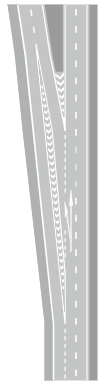
Central reservation on the left.
Central reservation on the right.
Road narrows on the left.
Road narrows on the right.
This sign shows that the central reservation (median) is located on the right-hand side of the road, which is important for driver positioning and lane choice.
What should drivers understand from this sign?
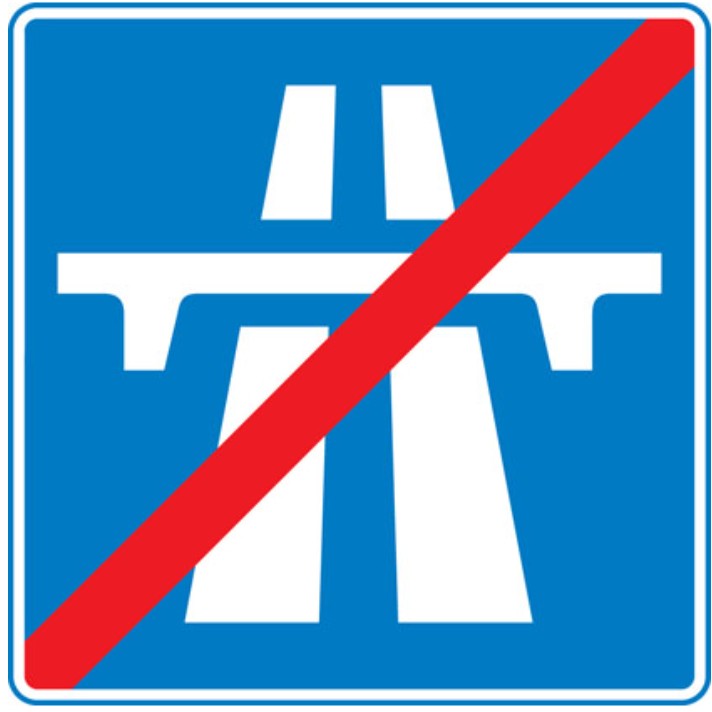
Exit closed.
End of the motorway.
Warning of traffic lights ahead.
Indicate pedestrian crossing.
This sign, placed on the main carriageway, indicates the end of the motorway. It helps drivers prepare for lane changes, adjust their speed, and transition safely to an all-purpose road.