Revision Module: 09 of 14
Full Free Driving Theory Practice Test 9
Check your score on this general practice set covering UK traffic signs and road laws.
Syllabus Covered
The Highway Code & Traffic Signs
Question Pool
25 Multiple-Choice Questions
Target Pass Mark
Aim for 86% or higher
📝 Test Instructions: If a particular question catches you off guard, check the breakdown at the end to learn the rule quickly.
Start Theory Test 9
Real Exam Mode: Q&A with Explanations
Where would you find green studs on a motorway?
Between carriageways.
Between the main carriageway and slip roads.
On the outer edge of the hard shoulder.
In the middle of each lane.
Green studs are used where slip roads join or leave the motorway to guide merging or exiting vehicles.
When can you park on a single yellow line?
Never.
Only on weekends.
Only during restricted hours shown on nearby signs.
At any time if you stay less than 5 minutes.
Parking on a single yellow line is only allowed outside the restricted times indicated on nearby signs.
This blue circular sign indicates:
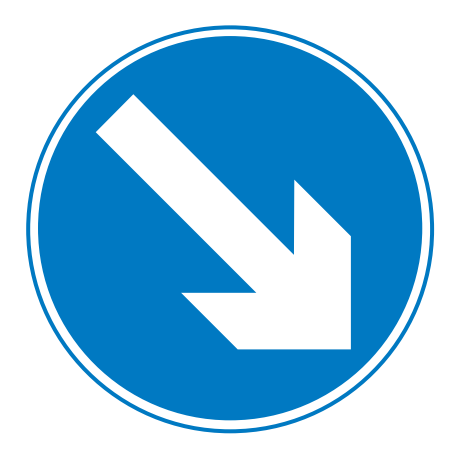
Keep right.
Turn right ahead.
No right turn.
Blue circular signs give mandatory instructions. A blue circle with a white arrow pointing right means you must keep right of an obstruction, such as a traffic island or roadworks.
This blue circular sign indicates:

Mandatory instructions.
Prohibited actions.
General warnings.
Blue circular signs are used to give mandatory instructions that road users must follow, such as directions (e.g. 'turn left', 'keep right') or lane usage. These signs are legally enforceable.
This sign belongs to which category?
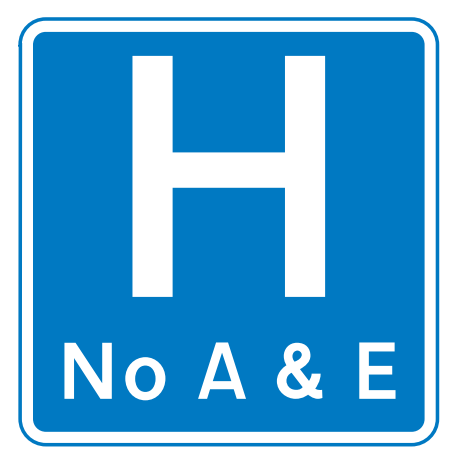
Information signs.
Regulatory signs.
Warning signs.
Information signs provide useful details to road users, such as directions, facilities, or road conditions. They are usually rectangular and help drivers make informed decisions without giving orders or warnings.
The below sign is classified as:
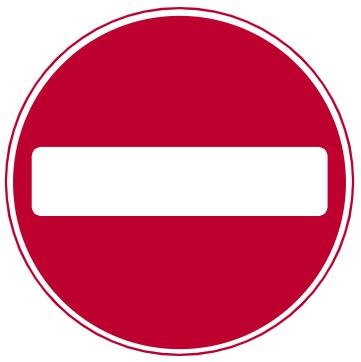
Warning sign.
Direction sign.
Regulatory sign.
Regulatory signs give mandatory instructions that must be obeyed, such as speed limits or no-entry signs. They are usually circular in shape and are essential for road safety and legal compliance.
This yellow waymarker symbol represents:
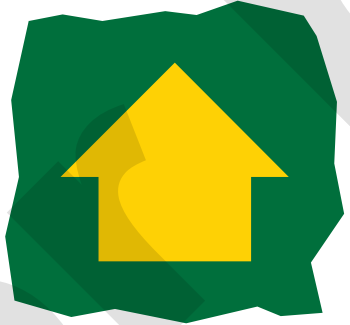
A bridleway for horse riders.
A public footpath.
A cycle route only.
A yellow waymarker symbol indicates a public footpath, which is a route where only pedestrians are allowed. It's commonly seen in rural areas and guides walkers along public rights of way.
At a level crossing, the red lights begin to flash. What must you do?
Continue if a train is not yet visible.
Stop and wait until the lights stop.
Accelerate to cross quickly.
Reverse away from the barrier.
Flashing red lights mean you must stop—trains may be approaching even if not yet visible, and crossing is extremely dangerous once lights begin.
What type of sign is this?
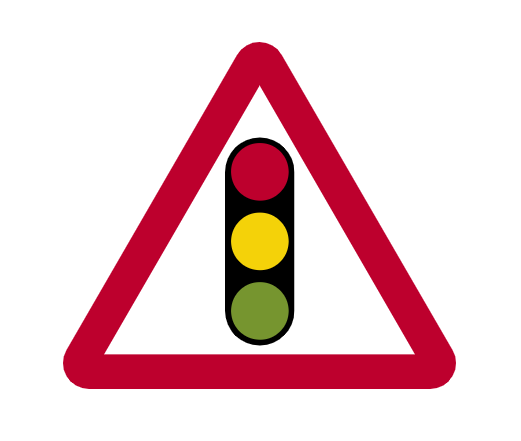
Regulatory sign.
Warning sign.
Information sign.
Warning signs alert drivers to potential hazards or changes in the road ahead. They are usually triangular with a red border and help you prepare for dangers like sharp bends, junctions, or pedestrian crossings.
This regulatory sign means:
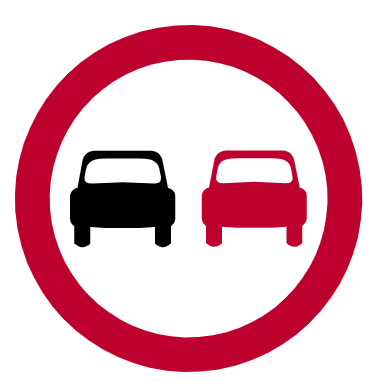
Overtaking is allowed.
Overtaking is not allowed.
Only overtaking red vehicles is prohibited.
This regulatory sign, typically showing a red car beside a black car inside a red circle, means no overtaking. It prohibits drivers from overtaking other vehicles on that stretch of road, ensuring safety in potentially hazardous areas.
How should you react to tram signs?
Follow them.
Drive slowly.
Always stop.
Overtake trams.
Tram signs provide important instructions about priority, lanes, and hazards. You must follow them carefully to ensure safe interaction with trams. Simply driving slowly is not enough, and stopping or overtaking inappropriately can be dangerous.
How should you react when driving behind a cyclist near a junction?
Be patient and give plenty of room when turning.
Overtake quickly before the junction.
Sound your horn to alert the cyclist.
Ignore the cyclist and follow closely.
Giving cyclists space and being patient near junctions improves safety for everyone.
What is the main reason for keeping a safe distance behind the vehicle in front?
To allow enough time to stop safely.
To let other vehicles overtake.
To signal to the vehicle behind.
To drive in the centre of the lane.
Maintaining a safe distance ensures you have enough time to stop or react if the vehicle in front slows down or stops suddenly, helping prevent rear-end collisions.
What's the default speed limit in built-up areas in Wales?
30 mph.
20 mph.
25 mph.
40 mph.
In Wales, the default speed limit in built-up areas with street lighting is 20 mph unless signs show otherwise.
What’s the correct way to drive in motorway lanes?
Stay in the left lane unless overtaking.
Pick the lane with the least traffic.
Use the fastest-moving lane to overtake.
Remain in one lane until your junction.
On motorways, you must keep to the left-hand lane unless overtaking; staying unnecessarily in middle or right-hand lanes can obstruct traffic and is against motorway driving rules.
Which one is correct about this traffic signal?
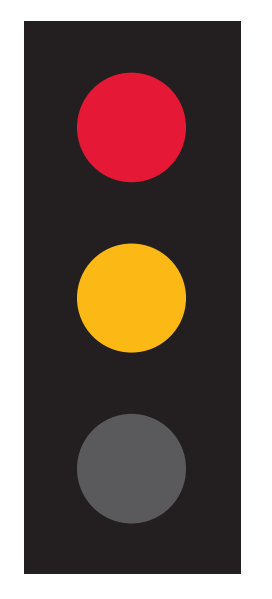
Only red light means stop.
Only amber light means stop.
Both red and amber lights mean stop.
When both red and amber lights show together, it signals that the red light is about to change to green. You must still wait and not move until the green light appears. It is illegal to go during red and amber.
What should you always do before signalling to change direction or position?
Honk your horn.
Check your mirrors.
Speed up.
Flash your headlights.
Before signalling, you must always check your mirrors to ensure it is safe and that other road users are aware of your intended manoeuvre. Signalling without checking can be dangerous.
What should you do if your vehicle breaks down on a level crossing?
Get out and move away.
Try to push the vehicle across.
Stay inside and wait.
Signal other drivers.
If your vehicle breaks down on a level crossing, you must get out immediately and move away from the tracks to a safe place, then call the emergency number to alert the signal operator.
A large vehicle ahead is turning and straddling lanes. What should you do?
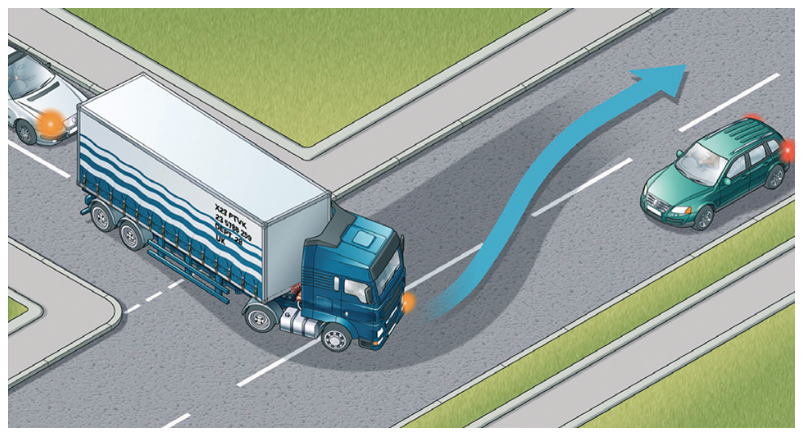
Stay back and be prepared to stop if needed.
Overtake quickly before it turns.
Squeeze past it on the inside.
Large vehicles often need more space to turn and may straddle lanes. Trying to overtake or pass them can be dangerous. It's safest to hold back and give them room to complete the turn safely.
When must children use a child car seat?
Only on motorways.
Only for long journeys.
Until they are 12 years old or 135 cm tall.
When travelling with an adult.
Children must use an appropriate child seat until they reach 12 years or 135 cm height for safety compliance.
What does this hand signal mean?
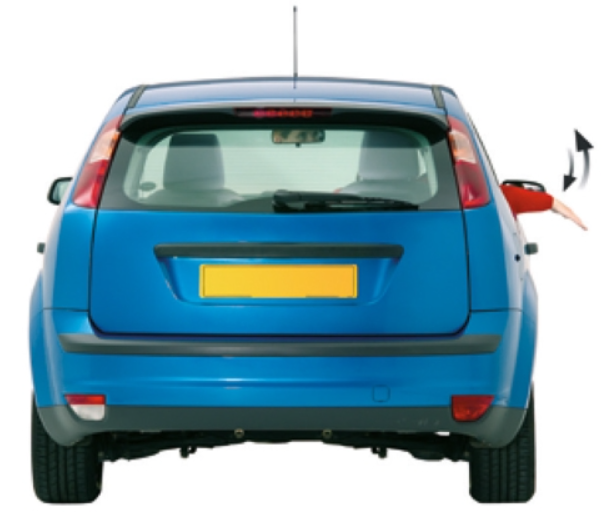
Intends to slow down or stop.
Intends to turn left.
Intends to turn right.
A driver moving their right arm up and down repeatedly is giving a hand signal to indicate they are slowing down or stopping. This is a recognised manual signal used when brake lights may not be visible or working.
What does a flashing amber traffic light mean at a pedestrian crossing?
Proceed only if no pedestrians are on the crossing.
Stop and wait for green.
Speed up to cross quickly.
Stop immediately.
Flashing amber means you may go but only if the crossing is clear of pedestrians.
When is it legal to park on the left-hand side of a one-way street?
Only at night.
Never.
When double yellow lines are present.
When there are no signs prohibiting it.
You may park on the left-hand side of a one-way street only if there are no signs or markings prohibiting parking. Always check for restrictions such as yellow lines or parking signs.
What is the legal alcohol limit for drivers in Scotland?
Zero tolerance.
35 mg per 100 ml of blood.
50 mg per 100 ml of blood.
80 mg per 100 ml of blood.
In Scotland, the legal alcohol limit for drivers is lower than in the rest of the UK: 50 mg of alcohol per 100 ml of blood, 67 mg per 100 ml of urine, or 22 µg per 100 ml of breath. Exceeding this limit is illegal and dangerous.
What makes a toucan crossing different from other crossings?
It allows pedestrians and cyclists to cross together.
It only stops traffic at night.
It is only for horse riders.
It requires pedestrians to press a button twice.
Toucan crossings accommodate both pedestrians and cyclists, with wider crossing areas and signals for both.