Revision Module: 10 of 13
Full Free Driving Theory Practice Test 10
Gauge your overall exam fitness on essential UK road rules and traffic signs.
Syllabus Covered
The Highway Code & Traffic Signs
Question Pool
25 Multiple-Choice Questions
Target Pass Mark
Aim for 86% or higher
📝 Test Instructions: Treat this paper like a real test run to make sure you are feeling confident across the entire syllabus.
Start Theory Test 10
Real Exam Mode: Q&A with Explanations
In the picture below, white reflective road studs are shown. What do they indicate?
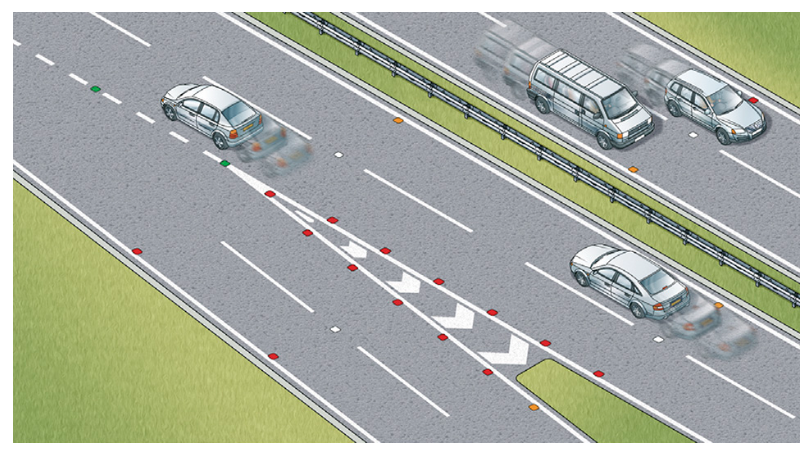
The middle of the road.
The left edge of the road.
The edge of the main carriageway.
White reflective road studs mark the lanes or the centre of the road. They help drivers stay in lane, especially at night or in poor visibility conditions.
What does this sign mean?
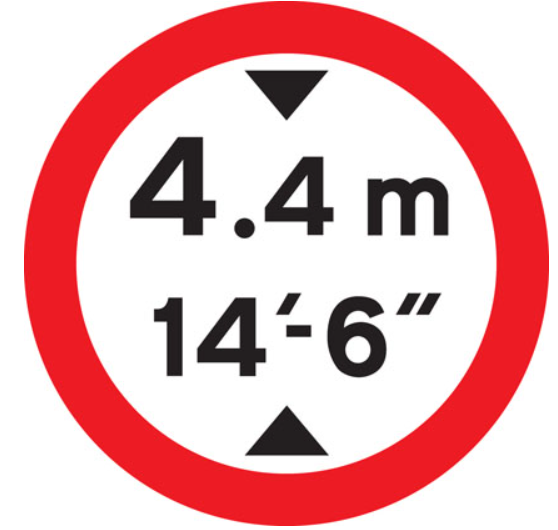
No vehicles over width shown.
Vehicles over this height should slow down but may proceed.
No vehicles over height shown.
This regulatory sign indicates a maximum height restriction. Vehicles taller than the height shown must not pass, as they risk hitting an overhead obstruction like a bridge or tunnel.
What does this sign represent?
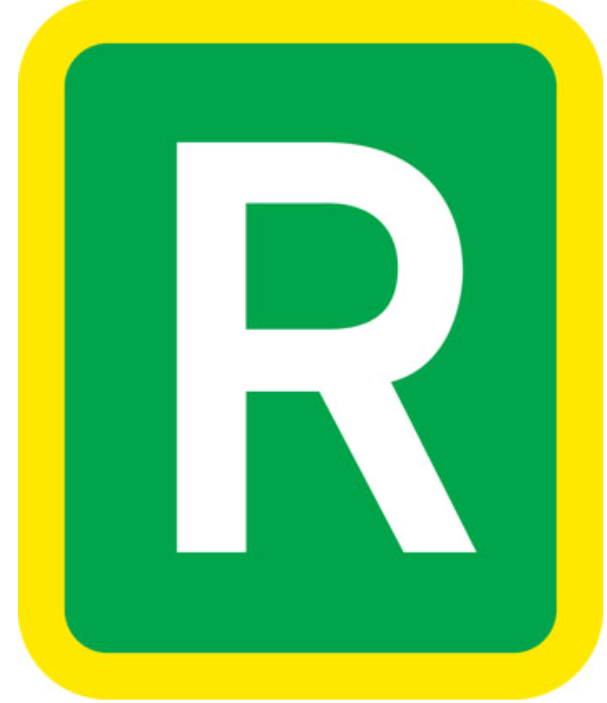
Ring road forming part of a primary route.
Primary route forming part of a ring road.
Restricted ring road for buses and taxis.
This sign indicates a primary route that is also part of a ring road. It helps drivers follow major routes around a town or city, easing traffic through central areas.
Before you begin reversing your vehicle, what should you always do first?
Check your mirrors and begin reversing slowly.
Use your horn and reverse carefully.
Look all around.
Before reversing, it’s essential to look all around, including checking blind spots and behind the vehicle, to ensure it’s safe. Mirrors alone do not give a full view, so turning and looking manually helps avoid hitting pedestrians, objects, or other vehicles.
When must you use dipped headlights?
When visibility is reduced or when driving at night.
Only when your speed exceeds 30 mph at night.
Only on motorways or dual carriageways during night.
Dipped headlights should be used at night and when visibility is reduced (e.g. due to rain, fog, or dusk) to help you see and to ensure other road users can see you clearly.
What should you do if you become drowsy while driving on a motorway?
Switch on your vehicle's hazard lights and continue driving slowly with caution.
Stop on the hard shoulder and take a quick nap.
Leave the motorway and take a break at the next service area.
If you feel drowsy, the safest option is to leave the motorway at the next service area and rest. Driving while tired is dangerous and can lead to serious accidents. The hard shoulder is only for emergencies and not for resting.
In which situation is it legal to overtake on the left on a multi-lane road?
When changing lanes.
When the car ahead is slow.
When the right lane is slower.
Overtaking on the left (also known as undertaking) is generally discouraged, but it is allowed when traffic is moving in slow queues, and vehicles in the lane to your right are moving more slowly than you. This commonly happens in congested conditions on motorways or dual carriageways.
When is a 30 mph speed limit automatically applied without signs?
On roads with street lights.
On roads with white centre lines.
Only on dual carriageways.
A 30 mph speed limit is automatically in effect on roads with street lighting, unless signs indicate otherwise. This is known as a restricted road, common in built-up areas for safety reasons.
What is the best way to use your brakes when driving downhill?
Shift to neutral and brake gently.
Use a low gear and brake gently.
Brake gently and switch off the engine.
When driving downhill, selecting a low gear helps control your speed by using engine braking, reducing the strain on your brakes. This method improves safety and prevents brake overheating.
How should you respond when an emergency vehicle with flashing blue lights approaches from behind?
Stop immediately, even if it blocks others.
Slow down and continue driving until you reach the next junction.
Let it pass safely without panicking or braking suddenly.
When an emergency vehicle approaches with flashing blue lights, you should stay calm and allow it to pass safely and promptly. Do not brake harshly or stop in unsafe locations, such as on bends or before junctions. Signal and move to the side when safe, ensuring your actions don’t endanger others. Let the emergency vehicle pass smoothly without causing unnecessary obstruction.
What does this sign indicate on a motorway?
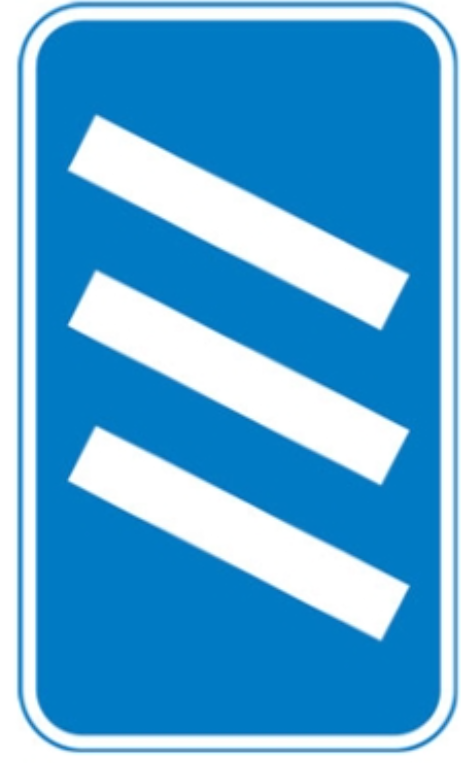
Motorway ends in 300 yards.
Speed limit will change in 300 yards.
You are 300 yards from the next exit.
On a motorway, countdown markers (with stripes) show how far you are from the next exit. Three stripes mean 300 yards, two mean 200 yards, and one means 100 yards.
How should you respond when a vehicle with flashing blue lights approaches from behind?
Stop immediately, full over right of way.
Slowdown and continue driving until you reach the next junction.
Allow it to pass safely without panicking or braking suddenly.
When an emergency vehicle with flashing blue lights approaches, stay calm, check your surroundings, and move aside safely if possible. Avoid sudden braking or stopping in unsafe places like bends, junctions, or solid white lines. Let it pass without risking other road users.
When joining a motorway from a slip road, what must you do first and foremost?
Slow down and merge gradually.
Use your indicators and merge carefully.
Give way to traffic already on the motorway.
When joining a motorway, your first priority is to give way to traffic already on the motorway. You should adjust your speed to match the flow, use your mirrors and indicators, and merge safely without forcing your way in.
Before moving off, what must you always do?
Look around and check your mirrors.
Rely on your mirrors and check blind spots.
Look around and check your blind spots.
Before moving off, it's vital to look around and check your blind spots, as mirrors alone won’t show everything. This ensures it’s safe to proceed and helps avoid collisions with cyclists, pedestrians, or other vehicles.
How can you recognise an automatic level crossing?
It has flashing red and amber lights.
It has flashing green and blue lights.
It has flashing red lights and half barriers.
An automatic level crossing is identified by flashing red lights and half barriers that lower automatically when a train is approaching. There are no amber lights or manual controls, and drivers must stop when the red lights flash.
What is the safest way to drive through surface water on the road?
Drive fast to avoid getting stuck.
Drive slowly in a low gear.
Drive cautiously in a high gear.
When driving through surface water, it's safest to go slowly in a low gear to maintain control and prevent water from entering the engine or causing you to skid. Driving fast can create waves and increase the risk of losing traction or damaging your vehicle.
What does this sign indicate?
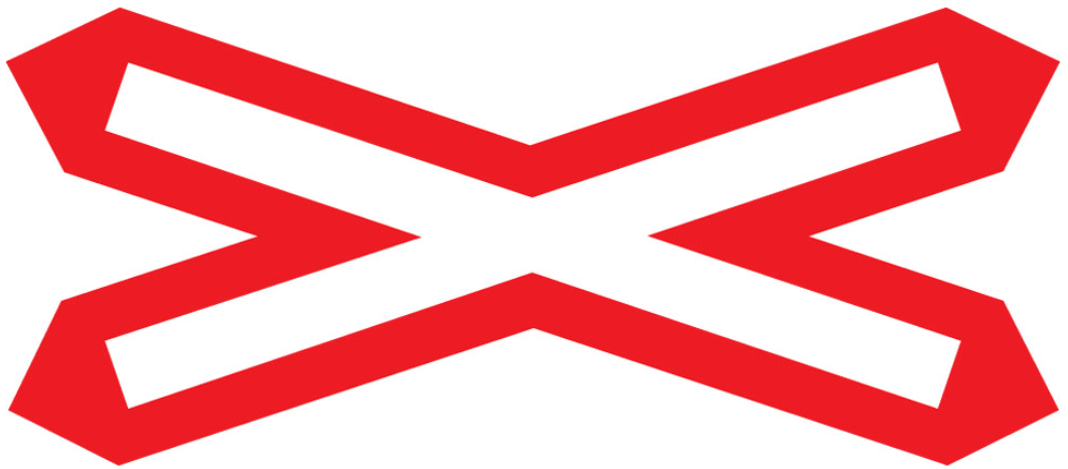
Level crossing ahead with automatic barriers.
Level crossing ahead without a barrier.
Tram crossing ahead without a barrier.
This warning sign alerts drivers to a level crossing ahead without a barrier or gate. Extra caution is needed, as trains may pass without automatic protection.
What do double white lines with a broken line on your side mean?
You may cross to overtake at any time.
You may cross if it’s safe and the road is clear.
You must not cross under any circumstances.
When you see double white lines with the broken line on your side, you are allowed to cross the lines (e.g., to overtake) if it is safe and the road ahead is clear. However, you must return to your side before the solid line begins.
How can coasting downhill affect your vehicle?
It improves engine performance and road grip.
It enhances control and allows smoother braking.
It reduces your control over steering and braking.
Coasting (driving with the clutch down or in neutral) reduces engine braking and can increase your stopping distance, especially downhill. This reduces your control over the vehicle, making steering and braking less effective and increasing the risk of an accident.
What is the safest way to stop your vehicle in an emergency?
Pump the brake pedal repeatedly to slow down.
Brake firmly while keeping full control of the vehicle.
Use the handbrake and switch off the engine.
In an emergency, you should brake firmly and steadily while maintaining full control of the steering. This helps you stop as quickly as possible without skidding. Do not use the handbrake, as it can lock the wheels and cause loss of control.
What does this symbol on a yellow background represent?
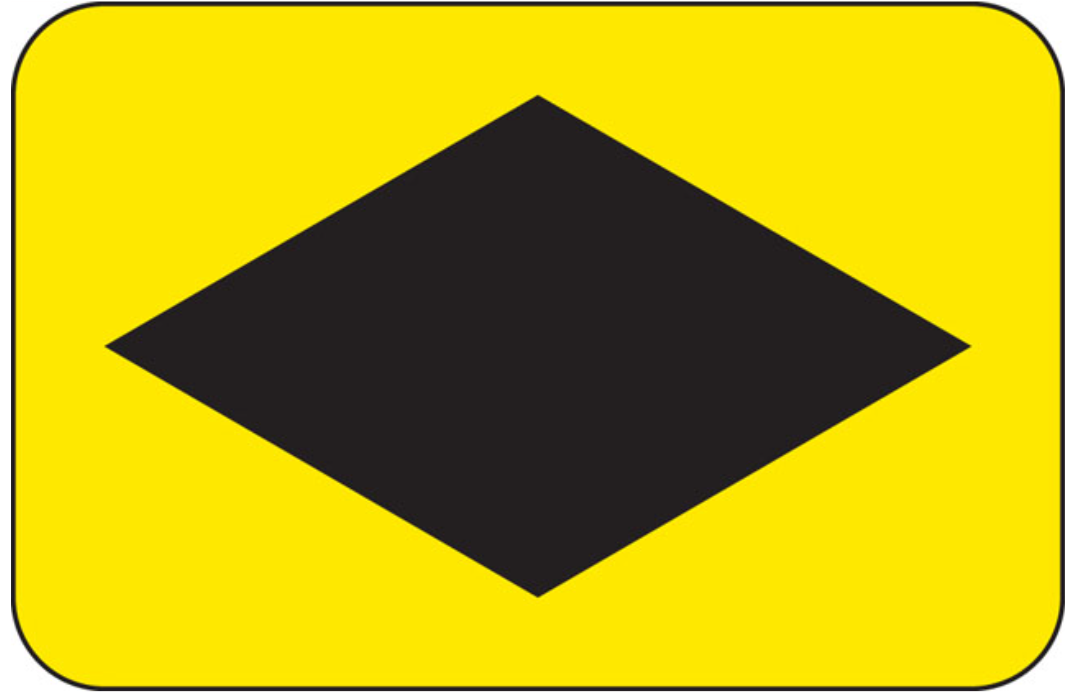
Emergency diversion route for motorway traffic.
Temporary diversion for long-distance traffic.
Alternative route for heavy vehicles in emergencies.
This yellow symbol indicates a route used during motorway closures. It helps guide drivers safely off the motorway and back on, following the marked shape (e.g. circle, square, triangle, or diamond).
While stuck in a traffic jam in a built-up area, what is the correct way to behave?
Move to the side and drive slowly.
Keep a safe distance and do not block side roads.
Move to the edge and stop until it is clear.
In traffic jams, especially in built-up areas, it's important to maintain a safe distance and avoid blocking side roads or junctions, so that emergency vehicles and cross traffic can move freely and safely.
How often should you have an eye test to ensure safe driving?
At least every two years.
Only when your vision becomes blurry.
At least every three years.
Regular eye tests are essential for road safety. It’s recommended that all drivers have an eye test at least every two years, even if they believe their vision is fine. This helps detect any early signs of eye conditions or vision changes that could affect driving ability. Clear vision is crucial for spotting hazards, reading road signs, and reacting quickly.
The picture shows a car approaching a roundabout. What should the driver do before entering?
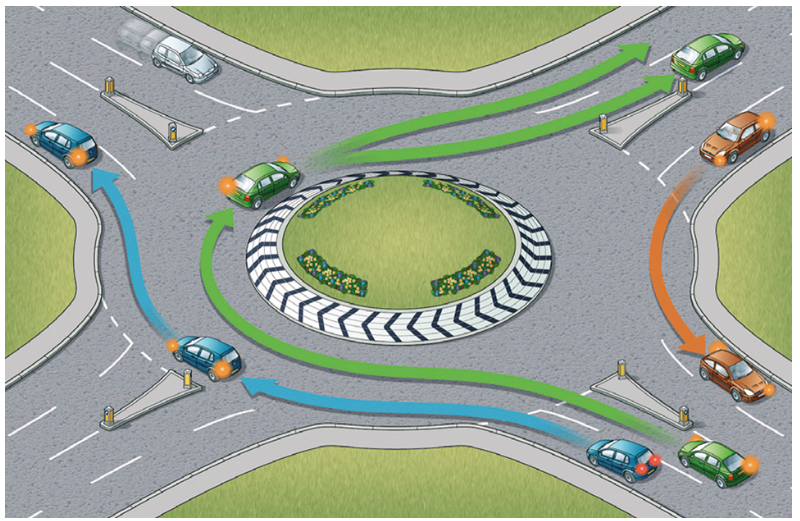
Give way to traffic from the left.
Give priority to traffic from the right.
Enter quickly without checking if road markings allow it.
At a roundabout in the UK, you must give way to traffic coming from your right unless road signs or markings tell you otherwise. This ensures safe and smooth flow of traffic.
What does this road sign indicate?
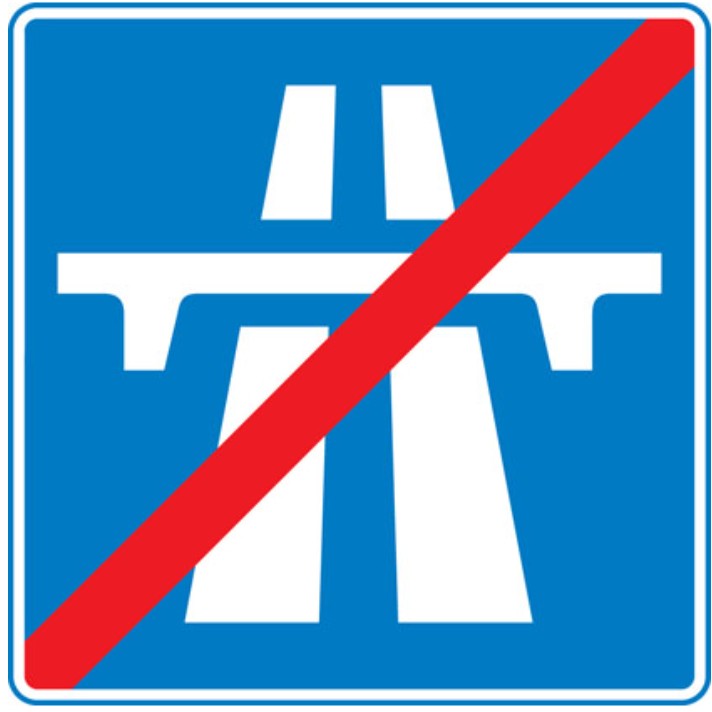
End of dual carriageway.
End of motorway.
No entry for motor vehicles.
This sign marks the end of a motorway. From this point, motorway regulations no longer apply, and the road may change to a different classification with different speed limits or rules.