Revision Module: 08 of 13
Full Free Driving Theory Practice Test 8
Master your understanding of UK highway regulations and official road sign meanings.
Syllabus Covered
The Highway Code & Traffic Signs
Question Pool
25 Multiple-Choice Questions
Target Pass Mark
Aim for 86% or higher
📝 Test Instructions: Complete all 25 questions to get an accurate reading on your overall average score across these topics.
Start Theory Test 8
Real Exam Mode: Q&A with Explanations
At a yellow box junction, when can you enter the box while waiting to turn right?
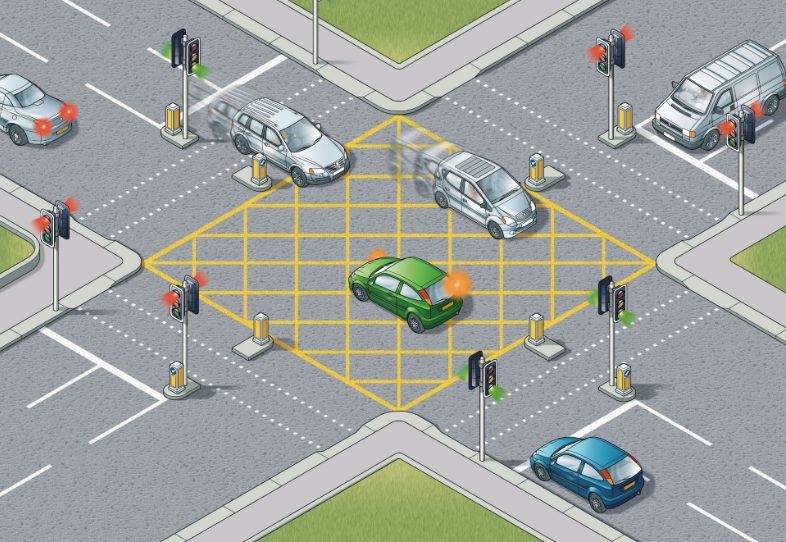
Only if the right-turn exit is clear.
Whenever there is oncoming traffic.
As soon as you reach the box.
You may enter a yellow box to wait for a right-turn gap only if the exit you’re turning into is clear.
This sign belongs to which category?
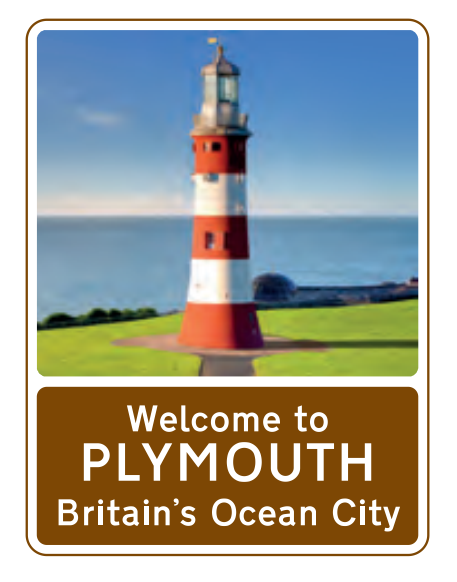
Direction signs.
Warning signs.
Information signs.
Boundary signs such as “Welcome to PLYMOUTH” inform drivers they are entering a city or region and are classified as information signs.
When can you use the right-hand lane of a three-lane motorway?
Only if you’re driving under 50 mph.
Only when there’s heavy traffic.
At any time, even if lanes are free.
When overtaking or directed by signs.
The right-hand lane is reserved for overtaking or following road signs; staying there unnecessarily causes obstruction and danger.
What is meant by the term 'tailgating'?
Driving with your lights on full beam.
Following another vehicle too closely.
Driving slowly in the right-hand lane.
Overtaking several vehicles at once.
Tailgating means driving too close to the vehicle in front, reducing your ability to stop safely if it brakes suddenly, and is considered dangerous and potentially a driving offence.
What’s the safest way to warn other drivers if your vehicle breaks down on a motorway?
Switch on your sidelights and wait inside.
Use dipped headlights to signal others.
Stand on the carriageway to warn traffic.
Turn on your hazard warning lights.
Hazard warning lights clearly alert approaching drivers that your vehicle is stationary and may be obstructing the motorway.
When must you use dipped headlights during the day?
When driving in tunnels or poor visibility.
Only after sunset.
When parked on the roadside.
During sunny weather.
Dipped headlights help other drivers see you in tunnels and poor visibility conditions, improving safety.
These white circular light signals are intended for:
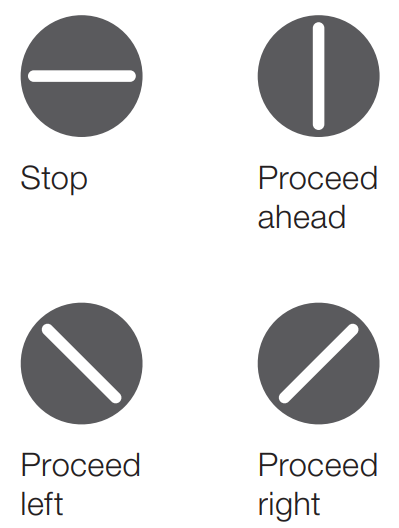
Tram drivers only.
All road users.
All except tram drivers.
These white circular signals are designed specifically for tram drivers only and are used to instruct trams to stop or proceed; they do not apply to other road users like cars, cyclists, or pedestrians.
What should you do if you approach a school crossing patrol showing a stop sign?
Slow down and proceed carefully.
Stop and wait until the sign is withdrawn.
Sound your horn to warn children.
Ignore if no children are visible.
You must stop when a school crossing patrol shows a stop sign to protect children crossing the road.
What should you do when approaching a roundabout?
Accelerate quickly onto the roundabout.
Give priority to traffic from the right.
Signal left when entering.
Stop before entering in all cases.
Traffic on the roundabout has priority, so you must give way to vehicles approaching from your right.
What do flashing amber beacons on a vehicle usually indicate?
Vehicle is about to reverse.
Vehicle is carrying dangerous goods.
Vehicle needs immediate assistance.
Vehicle is slow-moving or stationary.
Flashing amber beacons are used to warn of slow-moving or stationary vehicles, such as tractors or recovery vehicles, so drivers should approach them with caution, especially on high-speed roads.
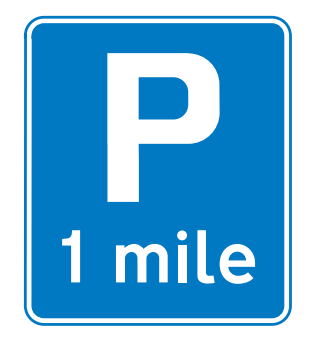
The below sign is classified as:
Warning sign.
Direction sign.
Information sign.
This sign is used to inform drivers about a parking area ahead, typically showing the distance, and is officially classified under information signs for lay-bys and parking areas.
This blue circular sign indicates:
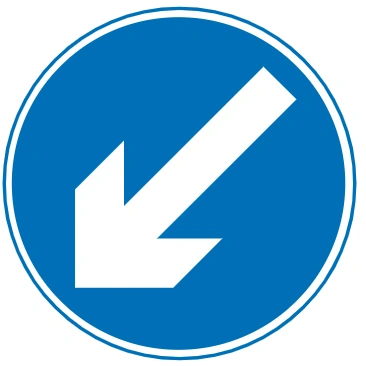
Turn left ahead.
No left turn.
Keep left.
This blue circular sign with a white diagonal arrow pointing down to the left instructs drivers to keep left of an obstruction or traffic island, not right.
How does a puffin crossing differ from a pelican crossing?
It uses sensors to detect pedestrians and adjusts signals accordingly.
It only works during daylight hours.
Pedestrians must wait for a green man signal without sensors.
It is only for cyclists.
Puffin crossings have sensors that detect pedestrians waiting or crossing and keep the lights red until safe to cross.
What type of sign is this?
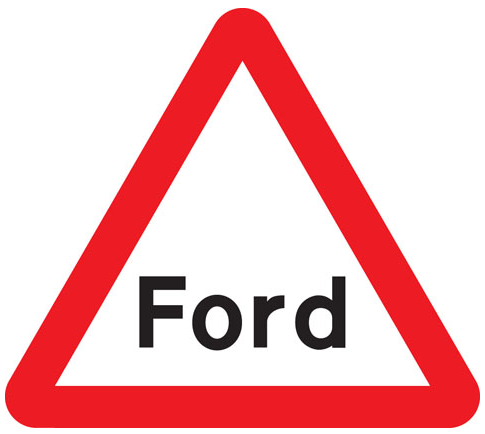
Warning sign.
Regulatory sign.
Tram sign.
This sign warns drivers of fixed roadside hazards like the end of a bridge or tunnel mouth, making it a warning sign.
When parked on the road at night, when should you switch on your parking lights?
When facing oncoming traffic.
When there are continuous white lines in the centre.
When the speed limit is above 30 mph.
When near a bus stop.
Parking lights must be used at night when parked facing oncoming vehicles to ensure your car is visible and reduce accident risk.
How can a DVSA officer legally instruct you to stop your vehicle?
By sounding a horn continuously.
By flashing amber lights and signalling.
By waving a red flag.
By flashing headlights rapidly.
DVSA officers can stop vehicles on any road by flashing amber lights, either from the front (to follow) or from behind (to pull over), and it is a legal offence to ignore these directions.
What is the national speed limit for cars on a single carriageway?
40 mph.
50 mph.
60 mph.
70 mph.
The national speed limit for cars on single carriageways is 60 mph, unless signs indicate a lower limit.
This green rectangular sign is used for:
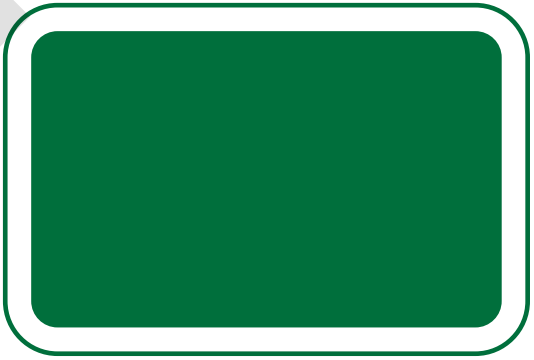
Direction sign on non-primary routes.
Information sign on primary routes.
Direction sign on primary routes.
Green rectangular signs are specifically used to provide direction on primary routes, not general information or signs for non-primary routes.
When amber lights and audible warnings start at an automatic half-barrier crossing, what must you do?
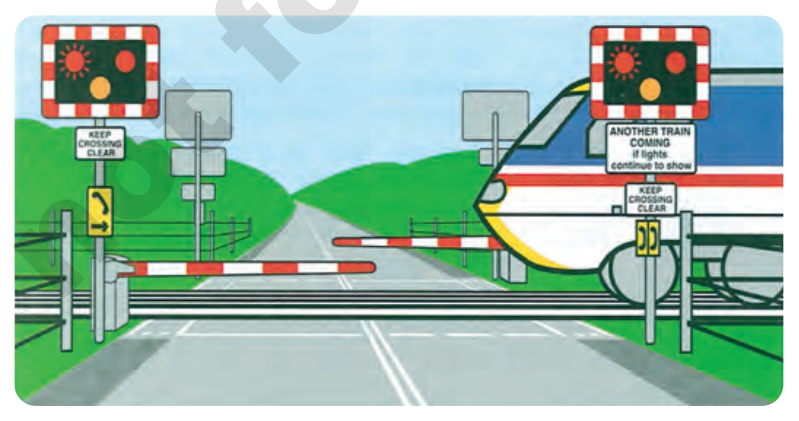
Stop and wait behind the stop line.
Continue if no train is visible.
Drive around the barriers quickly.
When amber lights flash and audible warnings sound at a level crossing, you must stop behind the stop line and wait until the lights stop and the barriers are fully raised before proceeding.
The below warning sign indicates:

Sharp deviation of route to the left only.
Sharp deviation of route to the right only.
Sharp deviation of route to the left and right.
This sign warns of a sharp change in road direction to the left only, requiring drivers to steer left immediately.
What is the main purpose of a catalytic converter in a vehicle?
To reduce engine wear.
To lower fuel use.
To cut harmful exhaust gases.
To decrease fire risk.
A catalytic converter reduces toxic gases from the engine’s exhaust, helping to protect the environment and meet emissions standards.
This sign means:
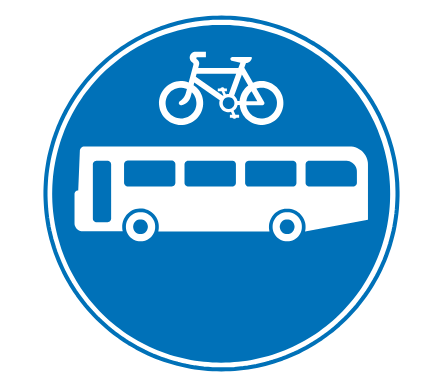
Prohibited route for buses and pedal cycles.
Route for buses and pedal cycles only.
Route for buses only.
The sign means the route is exclusively for both buses and pedal cycles together, not just one or the other.
This sign belongs to:
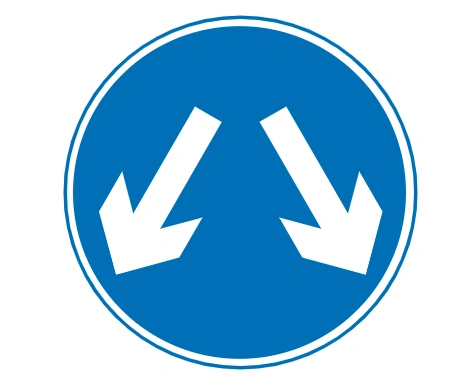
Information sign.
Regulatory sign.
Warning sign.
This blue circular sign with two white diagonal arrows allows vehicles to pass on either side and is classified as a regulatory sign.
What is the legal minimum insurance you need to drive on public roads?
Personal injury cover only.
Comprehensive insurance.
Third party, fire and theft.
Third party only.
The law requires at least third party insurance to cover injury or damage to others while driving on public roads.
While driving, you see a white diagonal arrow pointing left above your lane. What should you do?
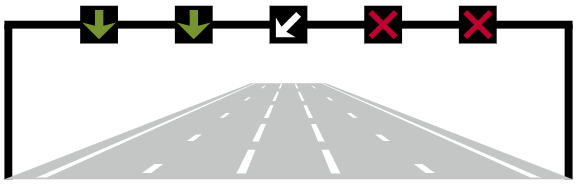
Stay in your lane and continue.
Do not move into the left lane.
Move to the left lane.
A white diagonal arrow pointing left warns that your lane is closing ahead, so you must safely merge into the left lane to continue.