Revision Module: 07 of 13
Full Free Driving Theory Practice Test 7
Refresh your knowledge with a balanced mix of UK road safety rules and official signage.
Syllabus Covered
The Highway Code & Traffic Signs
Question Pool
25 Multiple-Choice Questions
Target Pass Mark
Aim for 86% or higher
📝 Test Instructions: Don’t rush through the choices. This broad practice run is designed to spot any remaining gaps in your prep.
Start Theory Test 7
Real Exam Mode: Q&A with Explanations
What does this sign signify?
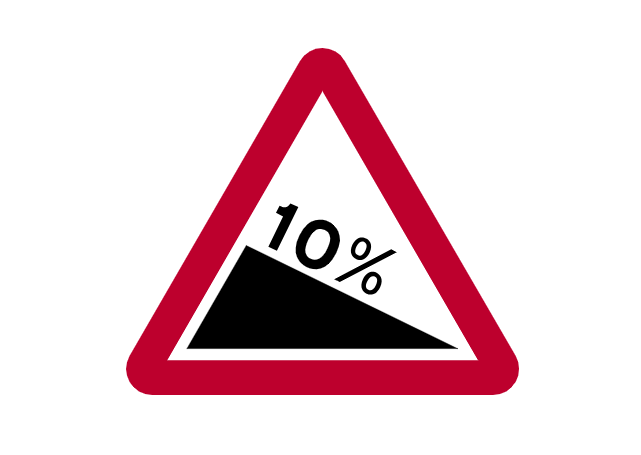
Steep downhill gradient of 10%.
Slippery road with 10% gradient.
Steep uphill gradient of 10%.
This sign signifies a steep downhill gradient of 10%, meaning the road drops 10 feet for every 100 feet forward. Drivers should shift to a lower gear to safely control their speed without overheating the brakes.
Why are road humps, chicanes, and road narrowings placed on certain roads?
Help pedestrians cross.
Speed up traffic.
Slow traffic down.
Divide traffic lanes.
These features reduce vehicle speed and improve safety, especially in areas where pedestrians or hazards are likely to be present.
On a wet road, what is the minimum time gap you should keep when following another vehicle?
Three seconds.
One second.
Two seconds.
Four seconds.
On wet roads, a four-second gap is recommended to give enough time to react and stop safely due to reduced tyre grip.
What does this sign mean?
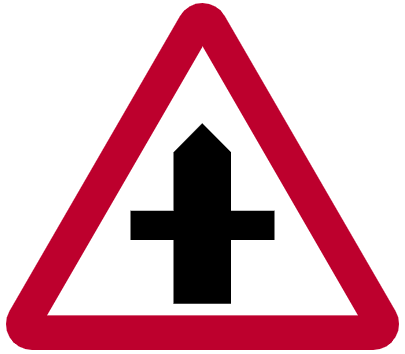
T-junction.
Crossroads.
Pelican crossing.
This sign warns of a crossroads ahead, so drivers must be ready to give way or stop, watching for other traffic.
Why is tailgating especially dangerous at higher speeds?
It gives less time to react to hazards.
It improves cornering stability.
Fuel economy is reduced.
It helps create smoother traffic flow.
Tailgating at high speeds leaves very little reaction time, increasing the risk of rear-end collisions if the vehicle in front stops suddenly.
Who is prohibited from using the motorway?
Car drivers with passengers.
Motorcyclists over 50cc.
Buses with more than 8 seats.
Learner drivers without an approved instructor.
Learner drivers are not allowed on motorways unless accompanied by an approved instructor in a dual-control car.
What does this blue circular sign represent?
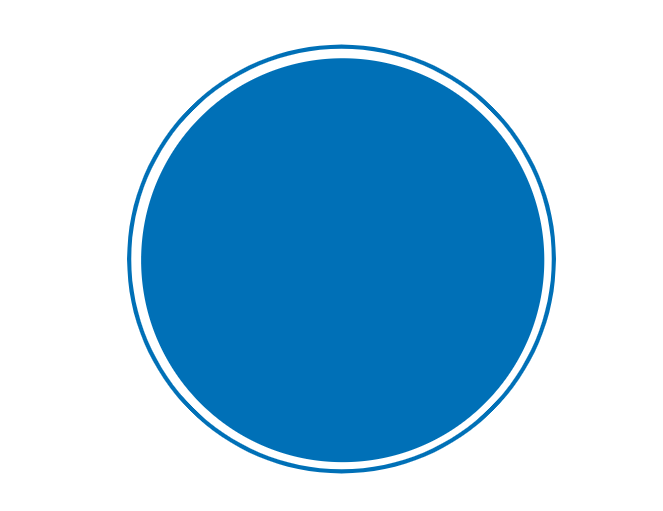
Prohibited action.
Mandatory instruction.
Warning of hazard.
Blue circular signs give mandatory instructions like specific directions or lane usage, which drivers must follow. They differ from warning signs (triangular) or prohibition signs (red-bordered circles).
What does this sign indicate?
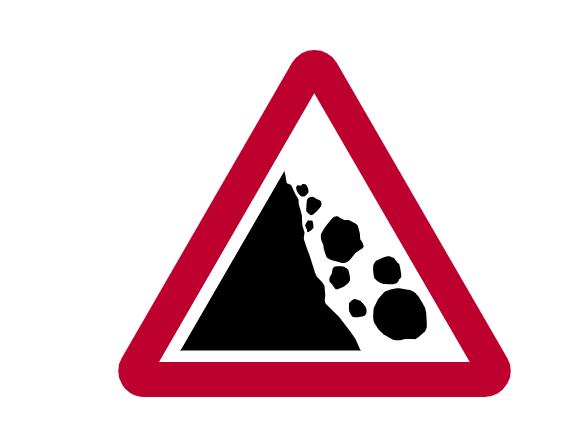
Risk of falling rocks.
Risk of landslides.
Risk of flooded road.
This sign warns drivers of falling rocks ahead, so they should slow down, stay alert, and be ready to stop if needed.
Why should you avoid coasting when driving downhill?
Wastes fuel.
Uncomfortable ride.
Gearbox strain.
Reduced control and longer stopping distance.
Coasting reduces engine braking and vehicle control, especially on slopes, which increases stopping distance and makes steering less responsive.
What does this sign mean?
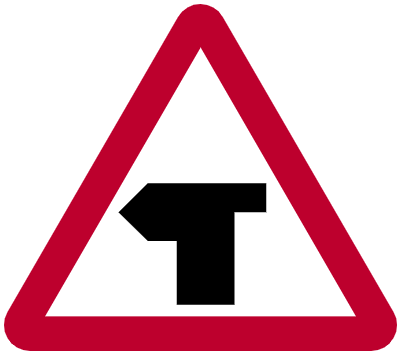
Turn left.
T-junction.
Crossroads.
This sign warns of a T-junction ahead, where you must slow down and give way to traffic from either direction.
What do rectangular traffic signs indicate?
Information.
Orders.
Warnings.
Rectangular signs provide information like directions or distances to help navigation, unlike circular signs that give orders and triangular signs that warn about hazards.
What colour are the reflective studs between the lanes on a motorway?
White.
Green.
Amber.
Red.
White studs mark the lane divisions on motorways and dual carriageways to help with lane discipline, especially in low visibility.
When driving in fog with visibility below 100 metres, what must you do?
Use hazard lights continuously.
Keep sidelights on only.
Switch to full beam headlights.
Turn on front or rear fog lights.
Fog lights must be used when visibility is severely reduced (below 100 metres) so that other drivers can see your vehicle sooner. Do not use full beam headlights as they can dazzle other drivers.
What does this sign indicate?
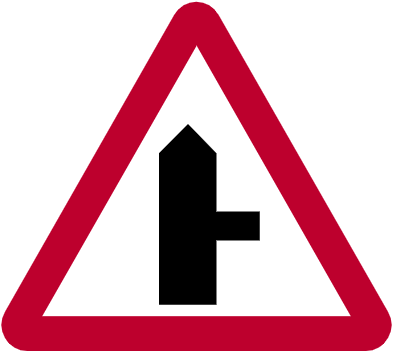
Junction ahead.
Side road ahead.
Crossroads ahead.
This sign warns of a side road joining the main road, so drivers should be alert for entering or crossing traffic.
What should you do if your vehicle begins to skid on a wet road?
Brake hard immediately.
Steer in the opposite direction of the skid.
Accelerate gently to regain control.
Steer in the same direction as the skid.
Steering into the skid helps you regain traction and control without overcorrecting, reducing the risk of spinning. Avoid braking hard, as this can make the skid worse.
What does this sign represent?
Lane edge near divided road.
Near-side edge or obstruction.
Off-side edge near obstruction.
This sign marks the near-side edge or an obstruction near the road, helping drivers stay safe, especially when visibility is poor.
What does this sign indicate?
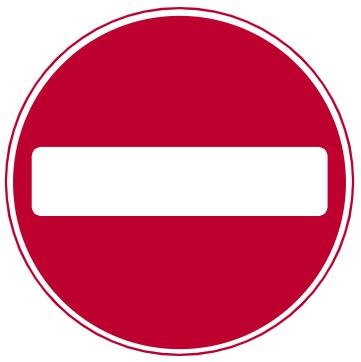
No entry for vehicles.
No parking zone.
One-way traffic.
This sign prohibits vehicles from entering the road ahead. Drivers must not pass beyond this sign, ensuring one-way traffic flow or restricted access for safety.
What does this sign represent?
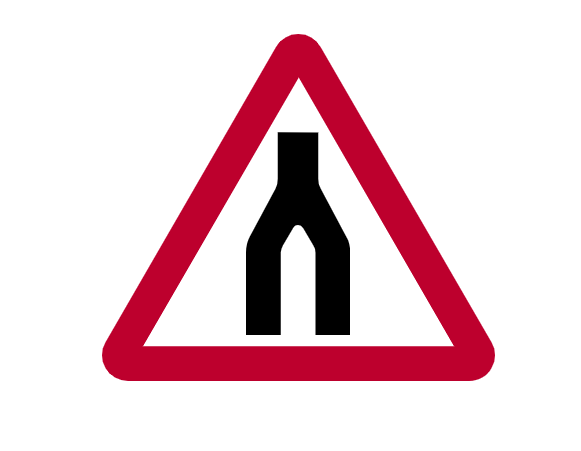
Start of dual carriageway.
Crossroads.
End of dual carriageway.
This sign warns that the dual carriageway ends, so drivers must adjust to a single carriageway and watch for oncoming traffic.
What should you do if you miss your exit on a motorway?
Stop on the hard shoulder and reverse.
Take the next exit.
Make a U-turn at the next gap.
Signal left and stop immediately.
If you miss your exit, continue to the next one; reversing or turning around on a motorway is illegal and extremely dangerous.
What does this sign represent?
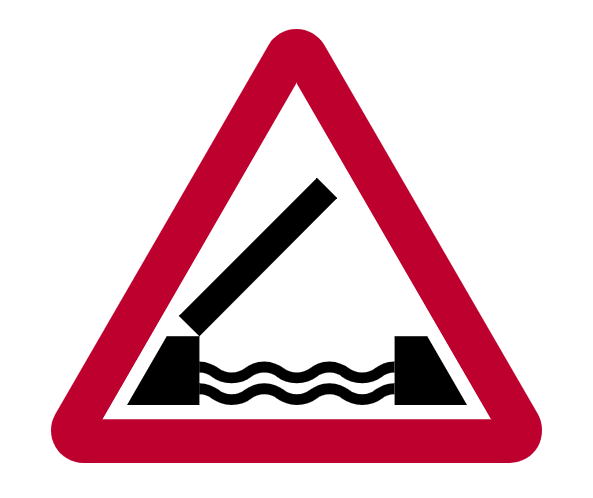
Railway crossing.
Swing bridge.
Hump bridge.
This sign warns of a swing bridge ahead that may open for ships, so drivers should be ready to stop.
What does this sign signify?
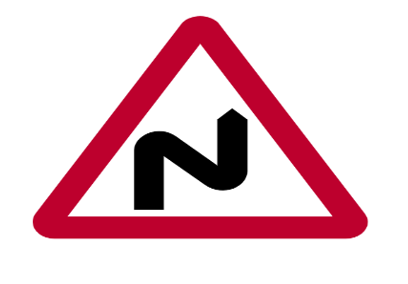
Double bend.
Sharp bend.
No U-turn.
This sign warns of two bends ahead, with the first to the right. Drivers should reduce speed and be ready for multiple directional changes on the road.
What do circular traffic signs indicate?

Warnings.
Orders.
Directions.
Circular signs give mandatory orders like speed limits or no entry, which drivers must obey. Triangular signs warn, and rectangular signs provide information or directions.
What does this sign mean?
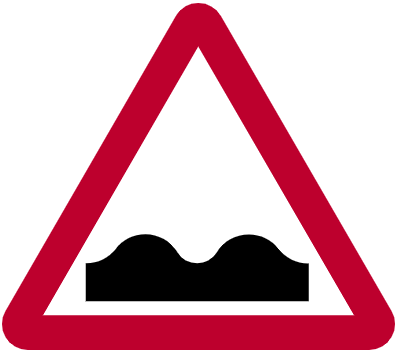
Rough surface.
Slippery road.
Uneven road.
This sign warns of uneven road ahead, so drivers should slow down and prepare for bumps that might affect control.
What does this traffic sign signify?
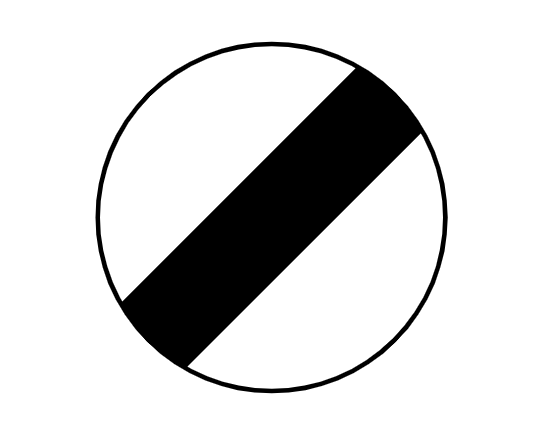
National speed limit applies.
No speed limit applies.
60 mph limit applies.
This sign activates the national speed limit, which varies: 60 mph on single carriageways and 70 mph on dual carriageways or motorways. Option C is incorrect as the limit isn’t always 60 mph.
When joining a motorway from a slip road, you should:
Stop before merging.
Use your horn to warn drivers.
Drive slowly to avoid other cars.
Accelerate to match motorway traffic speed.
Matching the speed of motorway traffic ensures a safe, smooth merge and prevents disrupting traffic flow.