Revision Module: 12 of 13
Full Free Driving Theory Practice Test 12
Your final comprehensive practice check covering all general UK road rules and traffic signs.
Syllabus Covered
The Highway Code & Traffic Signs
Question Pool
25 Multiple-Choice Questions
Target Pass Mark
Aim for 86% or higher
📝 Test Instructions: Your final review block. Aiming for an 86% or higher here shows you are completely ready for the actual exam.
Start Theory Test 12
Real Exam Mode: Q&A with Explanations
What should you be prepared for at roadworks where flag signals are being used?
Manual stop or go signals from a person with flags.
Flag signals can be ignored if traffic lights are also present.
Flag signals are for construction vehicles only.
At roadworks where flag signals are being used, you should be prepared for manual stop or go signals from a person with flags. These signals are used to control traffic flow safely through or around the work zone, especially when temporary traffic lights are not in operation. Always follow the flag person's instructions—they have the authority to direct traffic and ensure everyone's safety in such areas.
What does this sign mean?
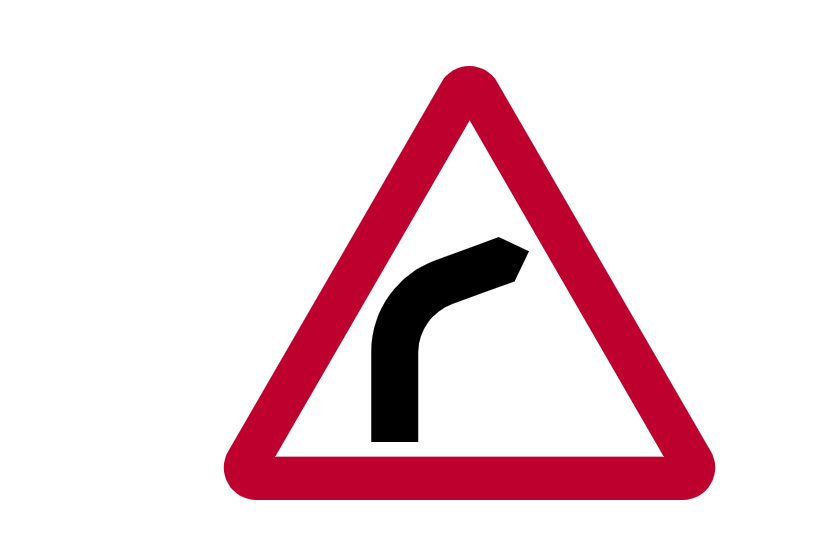
No right turn allowed.
Sharp right turn.
Bend to right turn.
This sign warns drivers of a gradual curve to the right, allowing them to adjust speed and stay aware of road conditions.
What is the legal minimum tyre tread depth for a car?
1 mm.
2.5 mm.
4 mm.
1.6 mm.
The legal minimum tread depth for car tyres is 1.6 mm across the central three-quarters of the tyre, around the entire circumference. This ensures safe grip, especially in wet conditions.
What does this sign indicate?
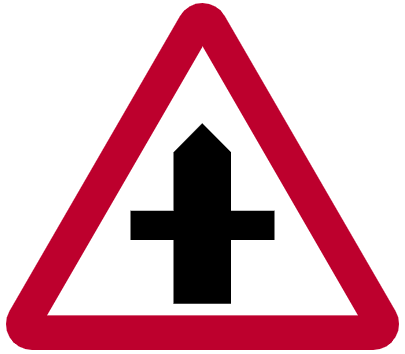
T-junction.
Crossroads.
Railway junction.
This sign warns drivers about an intersection ahead where roads cross each other, requiring extra caution to navigate safely.
You're driving on a motorway and notice a crawler lane appearing on the left. What kind of vehicles is this usually meant for?
Those climbing a steep hill.
Vehicles slowing for an emergency stop.
Traffic using an exit slip road.
Cars heading into a service station.
When driving on a motorway and a crawler lane appears on the left, it is usually meant for vehicles climbing a steep hill. These lanes are designed to allow slower-moving vehicles, such as lorries or heavily loaded vehicles, to move out of the faster-moving traffic lanes and climb the hill at their own pace without obstructing other drivers. This helps maintain smoother and safer traffic flow on inclines.
What does this sign mean?
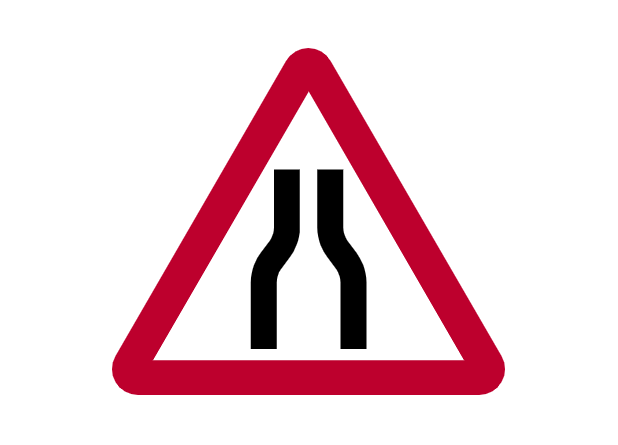
Road narrows on one side only.
Road narrows on both sides.
Road widens ahead.
This sign warns that the road will become narrower on both sides ahead, requiring extra caution and possibly reduced speed to safely continue.
What does this sign indicate?
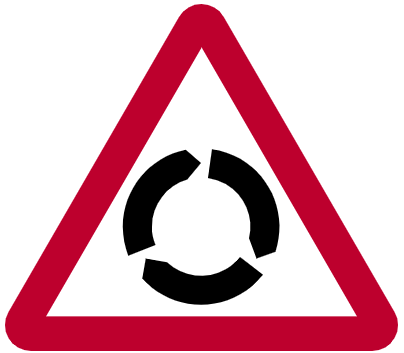
Mini-roundabout.
No through road.
Roundabout.
This sign means a roundabout is ahead, and you must give way to traffic from the right.
What does this sign indicate?
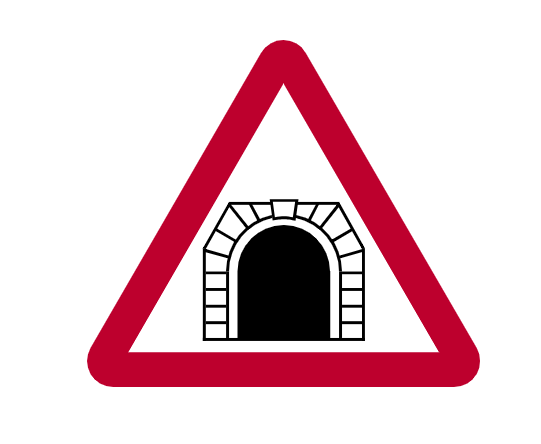
Tunnel ahead.
Tunnel closed.
Tunnel exit ahead.
This sign indicates that a tunnel is ahead, warning drivers to prepare for the change in driving conditions inside the tunnel.
How can you show a driver behind that you're slowing down?
Use your brake lights.
Switch on your sidelights.
Flash your interior lights.
Turn on your fog lights.
To show the vehicle behind that you're slowing down, you should use your brake lights. Pressing the brake pedal activates the lights, giving a clear signal to following drivers to reduce speed.
What does this sign indicate?
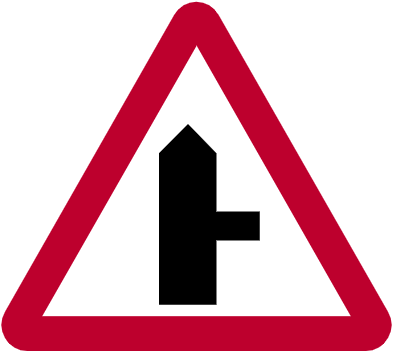
Side road.
T-junction.
Junction on a bend.
This sign warns drivers that a side road joins the main road, requiring extra caution when approaching and checking for merging traffic.
You’ve stored your car in a garage and sent off a SORN. When will that declaration expire?
When it is taxed, sold or scrapped.
When DVLA issues a new V5C log book.
When the vehicle goes for repair work.
Six months after the SORN was made.
A SORN (Statutory Off Road Notification) will expire when the vehicle is taxed, sold, or scrapped. Until then, it remains in effect, meaning the vehicle must not be used or kept on public roads.
What does this 'Give Way' sign indicate?
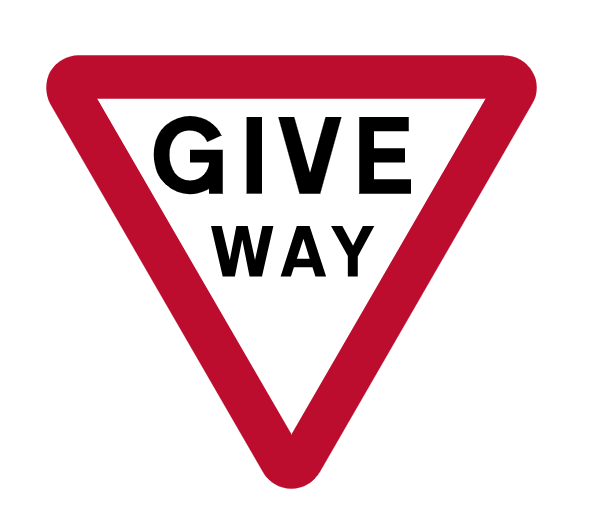
Stop only if necessary.
Give priority.
Force right of way.
You must yield to traffic on the main road. 'Force right of way' is incorrect, as it implies taking priority instead of giving it.
What does this sign mean?
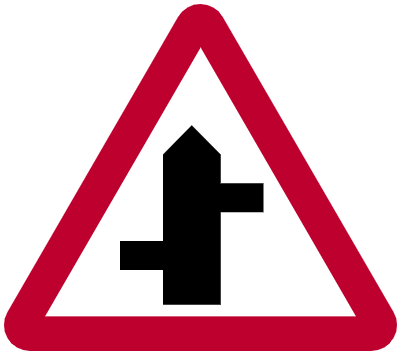
Slippery road ahead.
Staggered junction ahead.
Roundabout ahead.
This sign warns drivers of a staggered junction, where two minor roads join the main road at slightly different locations instead of directly opposite each other.
What does this sign indicate?
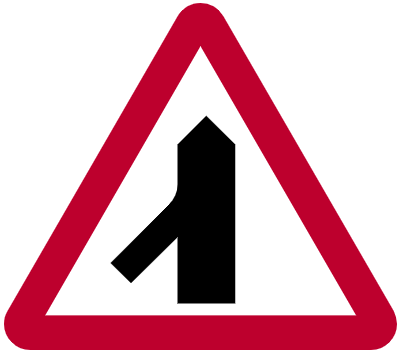
No merging allowed.
Lane ends on the left.
Traffic merges from the left.
This sign warns drivers that traffic will merge onto the main carriageway from the left, requiring caution when adjusting speed and positioning.
What does this red circular sign indicate?

Obstruction on off-side edge.
Obstruction on near-side edge.
Red marker on near-side edge.
A fully filled red circle signals an obstruction or edge hazard on the near-side (left side in the UK). Drivers should avoid that side and pass safely.
What is the safest approach when arriving at an unmarked crossroads?
If you're coming from the right, go slow and proceed with caution.
Slow down, look in all directions, and proceed when safe.
Flash your headlights and go ahead.
The safest approach when arriving at an unmarked crossroads is to slow down, look in all directions, and proceed when safe. Since there are no signs or road markings to indicate priority, all drivers should approach with caution, watch for other road users, and only move forward when it's clearly safe to do so. This reduces the risk of collision and ensures everyone shares the junction fairly and safely.
You're approaching a mini-roundabout. What is the correct procedure?
Give way to traffic coming from your left.
Stop completely, even if the roundabout is clear.
Give way to traffic approaching from your right.
Give way to vehicles directly ahead of you.
When approaching a mini-roundabout, the correct procedure is to give way to traffic approaching from your right. This rule applies just like at any other roundabout in the UK. Even though mini-roundabouts are smaller and often found in residential or urban areas, the same priority rules apply to ensure safe and predictable movement of vehicles. Always approach slowly, be prepared to stop, and give way to the right.
Who must avoid using the right-hand lane on a three-lane motorway?
Motorcycles with L-plates.
Vans carrying heavy loads.
Cars with roof boxes.
Vehicles towing caravans.
On a three-lane motorway, vehicles towing caravans must avoid using the right-hand lane. This rule is in place to maintain smooth and safe traffic flow, especially in the overtaking lane, which is intended for faster-moving vehicles. Towing vehicles are generally slower and less manoeuvrable, so restricting them from the right-hand lane reduces the risk of accidents and congestion.
What does this sign mean?
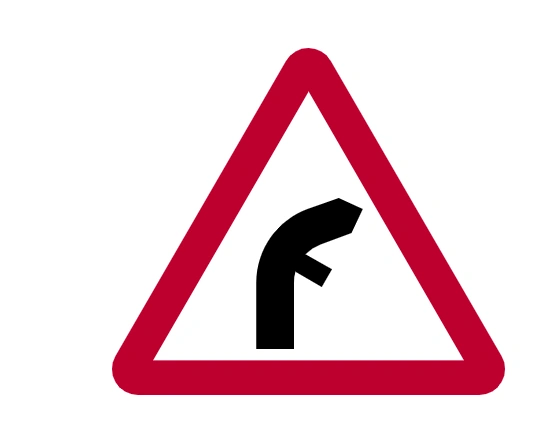
Junction on a bend.
Junction after a sharp curve.
Junction on a hill.
This sign warns drivers that a junction is ahead, located on a bend, requiring extra caution when approaching and navigating.
When travelling on a motorway, when should you use the left-hand lane?
Only when driving below 50 mph.
While preparing to exit the motorway.
Only when heavy vehicles are present.
At all times unless you're overtaking.
Use the left-hand lane on a motorway at all times unless you’re overtaking. This keeps traffic flowing smoothly and safely.
What does this sign indicate?
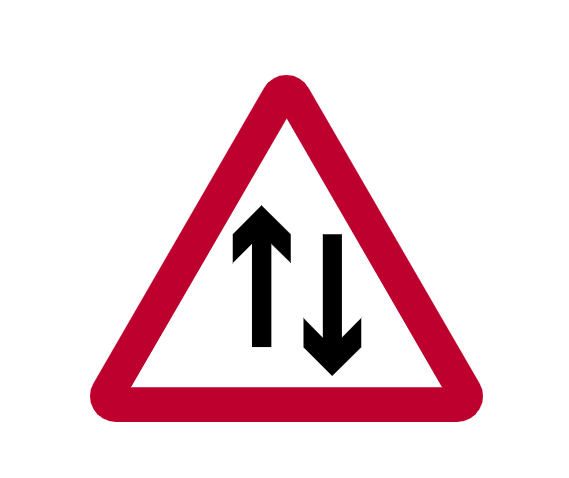
One-way traffic only.
Two-way traffic ahead.
Dual carriageway continues.
This sign warns that two-way traffic is ahead, so vehicles will be traveling in both directions—extra awareness and lane discipline are required.
What does this sign mean?
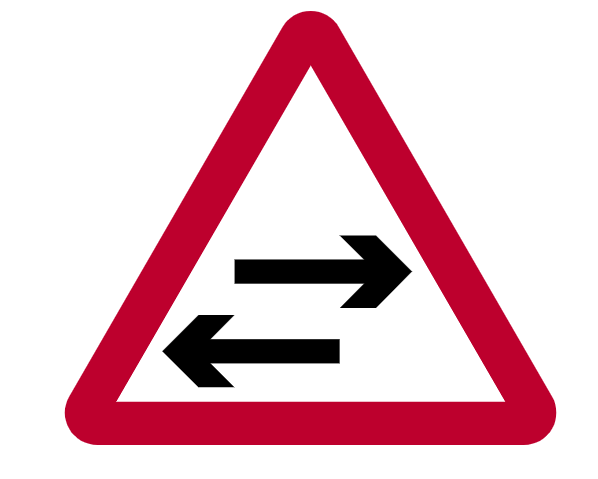
One-way street ahead.
Dual carriageway begins ahead.
Two-way traffic crosses your route ahead.
This sign warns that a road with two-way traffic will cross your path ahead, so you should slow down and prepare for vehicles from both directions.
What does this sign indicate?
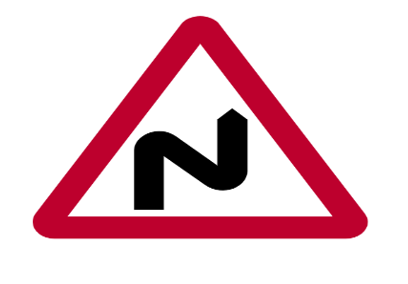
Single bend to the right.
Double bend first to the right.
Sharp right turn ahead.
This sign warns drivers of two consecutive bends ahead, with the first one curving to the right, requiring careful maneuvering.
You're driving when you notice the ABS warning light stays on. What should you do next?
Make sure the handbrake is fully released.
Check the level of brake fluid in the reservoir.
Press the brake pedal to test for resistance.
Have the braking system inspected without delay.
If the ABS warning light stays on while driving, it means there may be a fault in the anti-lock braking system. You should have the braking system inspected without delay to ensure your vehicle remains safe to drive.
What does this sign represent?
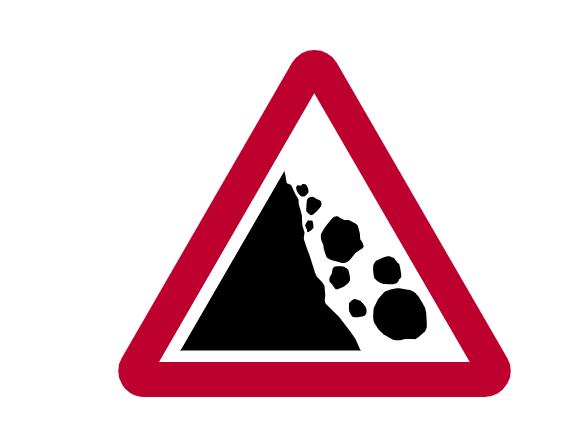
Roadworks ahead.
Uneven road surface.
Risk of falling rocks.
This sign warns drivers of the potential for falling or fallen rocks on the road, requiring caution and readiness to stop or slow down.